


AMX®
Robust & Resilient: 2-Stage Process Reactors
Built for reliability, designed to endure.
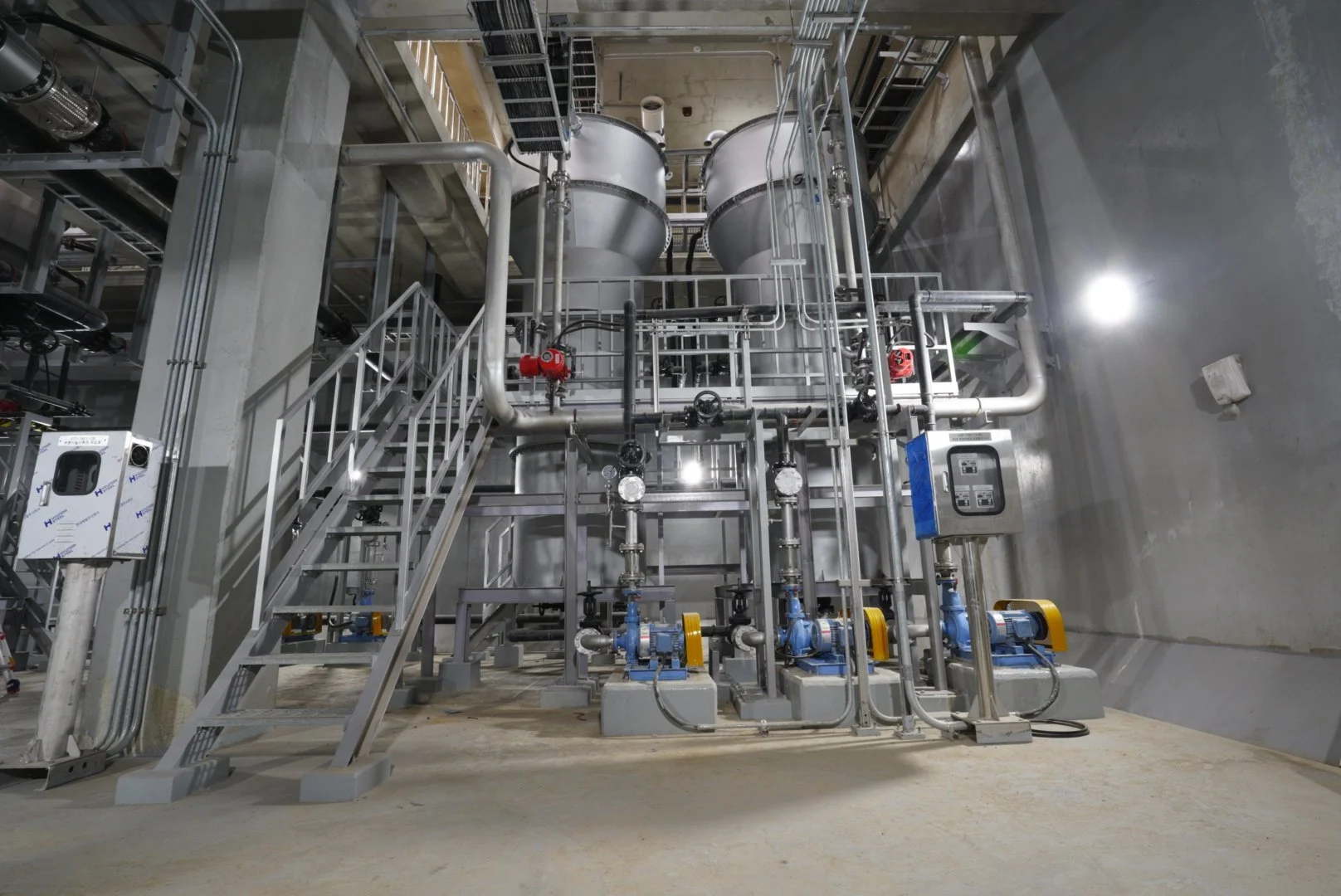
Our 2-stage AMX® process comprises of two physically discrete reactors, strategically designed to enhance resilience, protect critical biomass, and deliver consistent nitrogen removal even under challenging conditions.
Single reactor systems pose significant challenges - requires precise adjustments to manage coexistence of bacterial communities, vulnerable to contamination with minimal recovery potential, and additional pretreatment to handle load fluctuations.
Key 2-Stage Process Benefits:
-
Avoids risk of upsets caused by high TSS and COD spikes
Prevents process failure
Fully Automated and operator friendly
Reduce OPEX
Rapid response and maintenance in emergencies
-
Use of two microbes for optimal performance environment (suspended growth for PN and attached growth for anammox)
Handles high C/N ratio up to 2 or higher
Achieves > 90% of TIN (Total Inorganic Nitrogen) removal even with variable flow and loads
-
Shield Anammox bacteria from harmful sulfate, heavy metals, and organic toxins
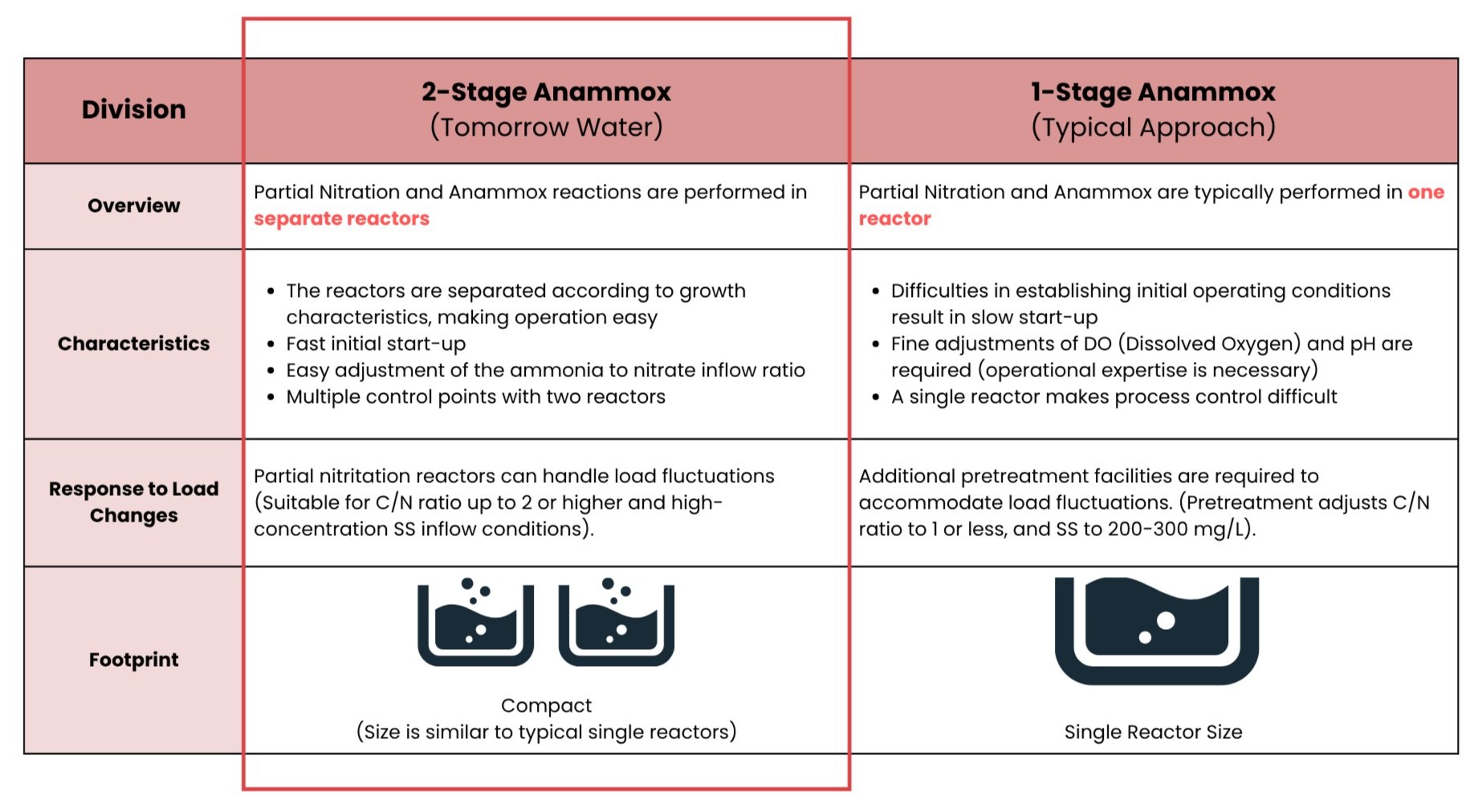
Process isolation and targeted treatment are not possible in single-stage systems, which are far more vulnerable to toxicity events.
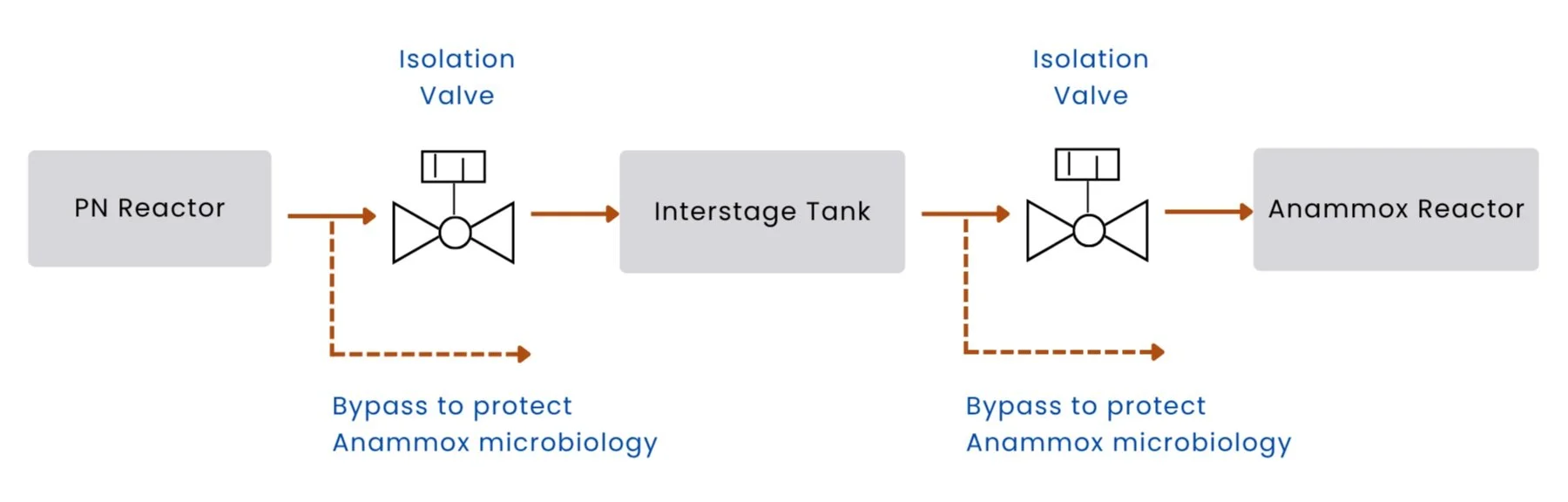
Stage 1: PN Reactor
Short-cut nitrogen removal reactions that converts half of ammonia into nitrite
Oxygen Demand 1.90g O₂/gN
Carbon Demand 0.0g COD/gN
Adjust aeration, SRT, pH, and temperature in Stage 1 without disrupting Anammox performance in Stage 2
Suitable for C/N ratio up to 2 or higher and highconcentration SS inflow conditions
Stage 2: Anammox Reactor
Enable reaction to convert ammonia and nitrite into nitrogen gas through anammox
Anaerobic environment for anammox bacteria
Protection from sulfate, heavy metals, and organic toxins
Ideal influent concentration for the anammox process is achieved before entering the Anammox Reactor (no pre-treatment necessary)
Ideal influent concentration: NH₄ 50% + NO₂ 50%
Nitrite-rich effluent is treated without the addition of external organic carbon
Real Challenges. Real Recovery. Real Stories.
Influent with Sulfate Ions
1. Noksan
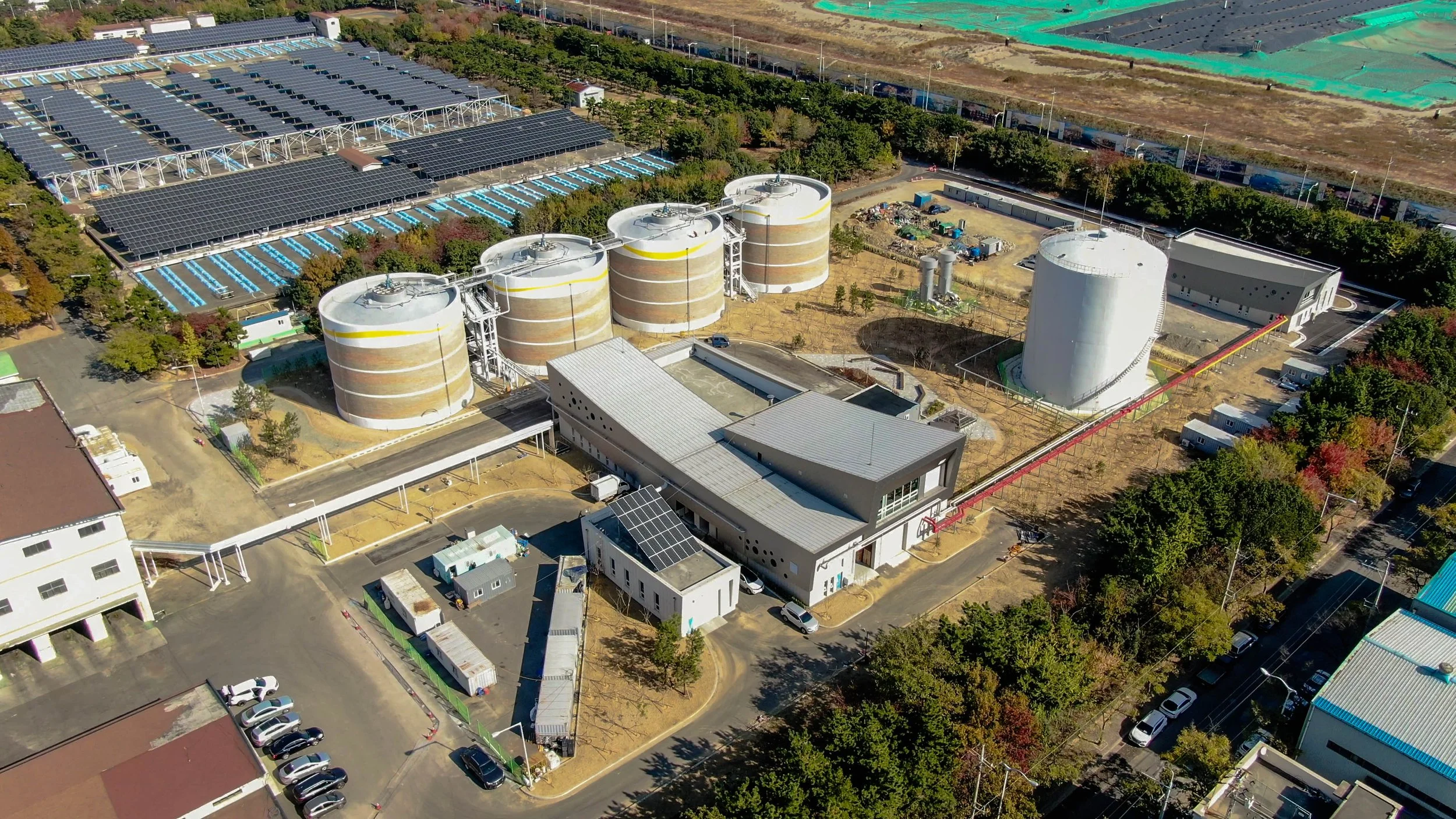
A high concentration of sulfuric acid was found at Noksan’s full-scale plant. The findings confirmed that sulfate concentrations exceeding 500 mg/L significantly inhibited anammox microbial activity, reducing nitrogen removal efficiency during the initial operational phases. Elevated sulfate levels also directly impair the function of anammox-related enzymes (e.g., hzs, HDH). Under sulfate rich conditions, hydrogen sulfide (H₂S) were produced, which is highly toxic to anammox bacteria.
The crisis was averted as Tomorrow Water was able to isolate the reactors to implement sulfate mitigation strategies and quickly replenish the system with Anammox microorganisms from its own Anammox seed facility.
Overcoming high concentration sulfuric acid inhibition in a full-scale plant operation.
2. Quantum Organics
Centrifudge Malfunction leading to Polymer Overdose
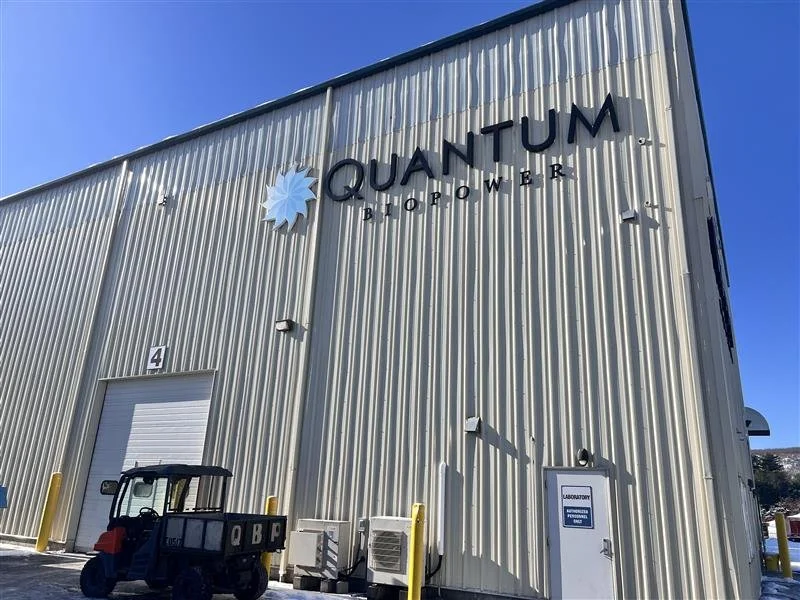
During our AMX® pilot operation at Quantum Organics, we encountered an unexpected challenge: a polymer overdose in the centrate stream. The sudden spike in polymer began to disrupt the performance of the upstream partial nitritation (PN) reactors, posing a serious threat to the downstream Anammox bacteria.
In response, Tomorrow Water initiated overnight aeration in the PN tank to strip and degrade the excess polymer. By the next morning, nitrite production resumed—signaling the restoration of the partial nitritation pathway. The rapid intervention enabled a successful restart of the PN reactors and preserved the health and activity of the Anammox bacteria. With Tomorrow Water’s unique 2-Stage AMX®, a potential process upset was prevented and the overall AMX pilot performance was safeguarded.