


The Most Resilient 2-Stage Anammox Solution
Anammox Technology: A Cost-Effective Solution for High-Concentration Nitrogen in Wastewater
Why Anammox Technology is Needed?
Recently, there has been a shift toward co-digestion using anaerobic digestion to produce biogas, rather than landfilling or incinerating organic waste such as sludge. When organic waste decomposes, methane is released, creating a greenhouse gas that is 28 times more potent than CO₂ over a 100-year period. This has spurred efforts to reduce methane emissions and combat climate change. In addition to environmental benefits, biogas can be converted into valuable energy sources such as electricity, LNG, hydrogen, methanol, or sustainable aviation fuel (SAF), creating significant economic gains.
However, during anaerobic digestion, carbon from organic waste is transformed into biogas, but nitrogen remains largely unchanged, ending up in the digestate—a material rich in high-concentration ammonium nitrogen. While this digestate can be used as fertilizer on agricultural land, urban areas that process sewage sludge and food waste require costly treatment to prevent nitrogen from contaminating groundwater.
Conventional nitrogen removal (nitrification–denitrification) requires large amounts of methanol and energy-intensive aeration. Often, the costs of these chemicals and energy exceed the revenue generated from biogas, hindering biogas production efforts.
This is where Anammox technology comes in: it dramatically reduces the cost of nitrogen removal—saving about 67% on electricity and 100% on external chemicals—and makes co-digestion more economically viable while also contributing to climate change mitigation. It’s a revolutionary water treatment method that can help both the environment and your business.
Using ammonia (electron donor) & nitrite (electron acceptor)
2 Types of Anammox Technology
Anammox systems typically involve two types:
(1) Single Reactor:
A single-reactor system combines aerobic ammonium-oxidizing bacteria (AOB) and anaerobic Anammox bacteria in one unit to save space. However, this design forces two groups with fundamentally opposite growth requirements—oxygen for AOB and oxygen-free conditions for Anammox—to coexist in the same environment, creating operational challenges and highly prone to fail.
(2) 2-Stage System:
A 2-stage system uses separate reactors: one for AOB to carry out partial nitritation, and another for Anammox bacteria to consume the resulting nitrite and ammonium. This separation allows each group of microorganisms to thrive under their optimal conditions, ensuring stability and safety. The rapid nitrogen removal in a 2-stage system allows a much smaller footprint—saving space and simplifying installation.
AMX®: 2-Stage Anammox Solution
Why Did Tomorrow Water Develop the 2-Stage AMX?
Tomorrow Water is only company to commercialize the 2-Stage Anammox process. Tomorrow Water’s AMX®: 2‑Stage Anammox Solution that utilizes shortcut nitrogen removal by combining Partial Nitritation (PN) and Anammox reactions into a compact, energy-efficient process.
The 2‑Stage Anammox Solution—separating PN and Anammox into individual reactors—forms the basis of AMX®’s Robust & Resilient design, offering stable performance even under harsh or variable conditions by protecting sensitive Anammox bacteria.
This same 2-Stage approach enables the highest & fastest nitrogen removal rates in its class, maximizing efficiency and most importantly, reducing construction footprint due to high Nitrogen Loading Rate.
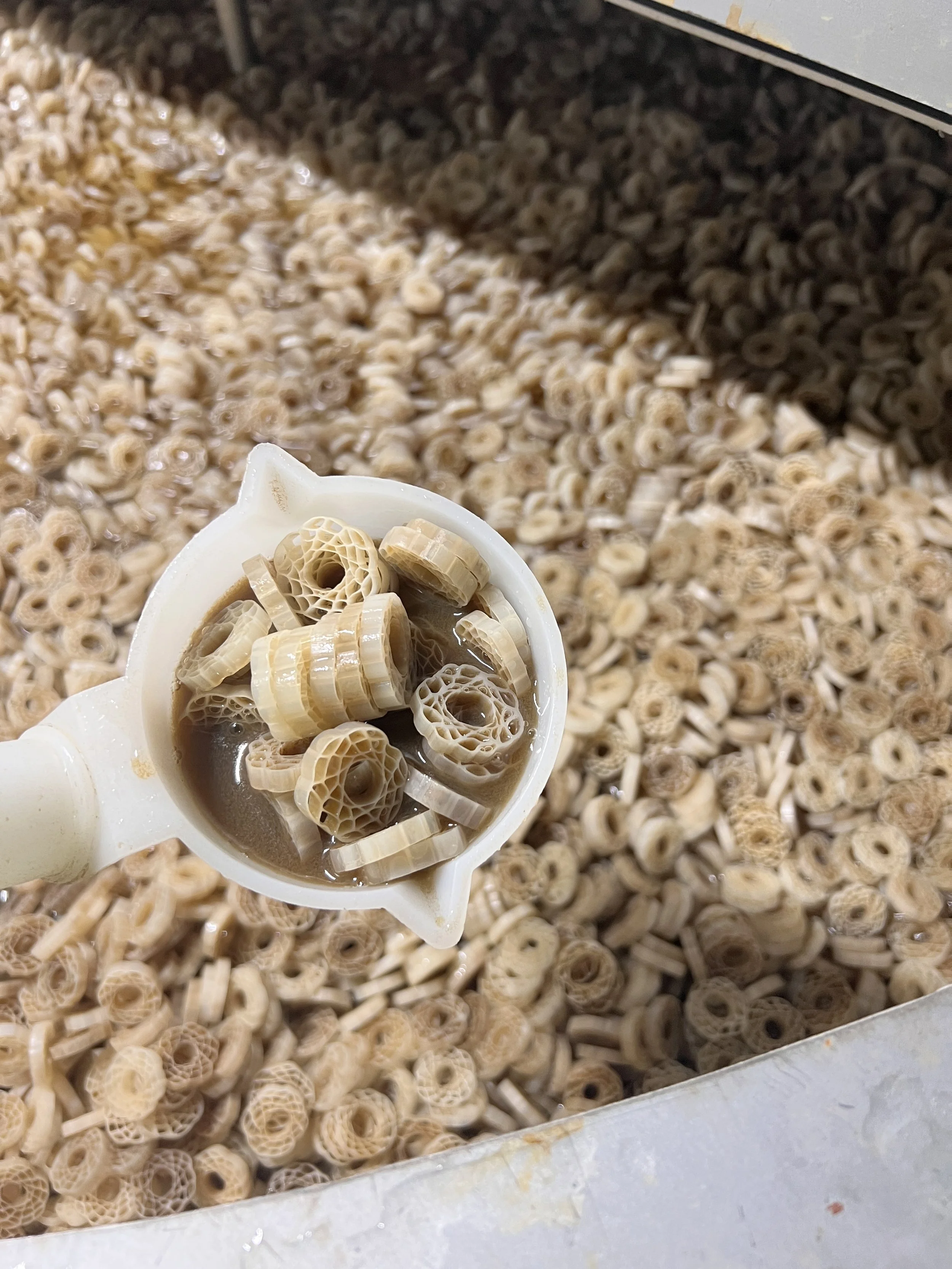
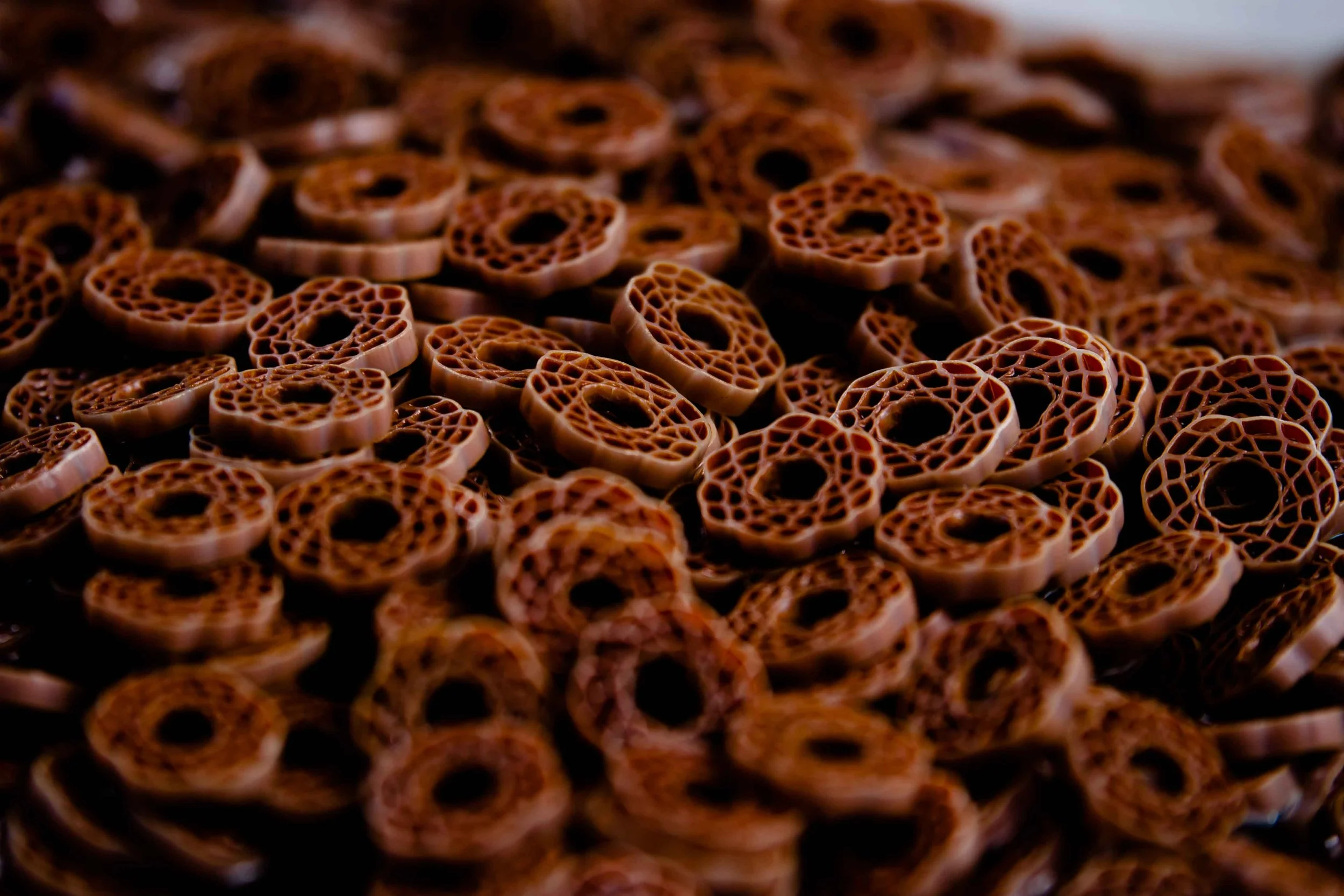
At the core of this performance is Candidatus “Brocadia Sinica” JPN1, a highly active and adaptable Anammox strain that drives consistent results across diverse wastewater conditions.
Here's why we prefer this method:
Robust and Stable Operation
Co-digestion, which processes various organic wastes together, brings various changes to the operation of anaerobic digesters. Digestate characteristics can vary depending on high organic content or alkalinity, yet single-reactor technology struggles to accommodate these fluctuations in the influent. This is because the amount of oxygen cannot be adjusted arbitrarily because the aerobic and anaerobic conditions must be balanced in one reaction tank. In many cases, single reactor operation is difficult due to high levels of organic matter not being sufficiently converted to biogas and carry over in the influent water raising the C:N ratio.
Faster Nitrogen Removal & Smaller Footprint
Maintaining perfect conditions for both AOB and Anammox bacteria in one reactor is challenging. Our two-stage system controls oxygen levels separately for each bacteria type, ensuring optimal conditions. This allows for higher nitrogen-loading rates—meaning faster treatment times and a smaller plant footprint—compared to single-reactor setups that often need more space due to longer processing times.
Exceptional Strain and Versatile Applications
Our Anammox bacteria, Brocadia sinica, was supplied by Professor Okabe from Hokkaido University in Japan. We select the fastest-growing strains that best handle load fluctuations, ensuring reliable and efficient performance.
If you're interested in a cost-effective, reliable, and environmentally friendly solution for high-concentration nitrogen removal, Tomorrow Water’s 2-Stage AMX system is a smart choice. We are committed to delivering advanced wastewater treatment technology to meet today’s challenges.
-
![]()
Robust & Resilient: 2-Stage Process
-
![]()
Highest & Fastest: Smaller Footprint
-
![]()
Candidatus “Brocadia Sinica” JPN1
How it works
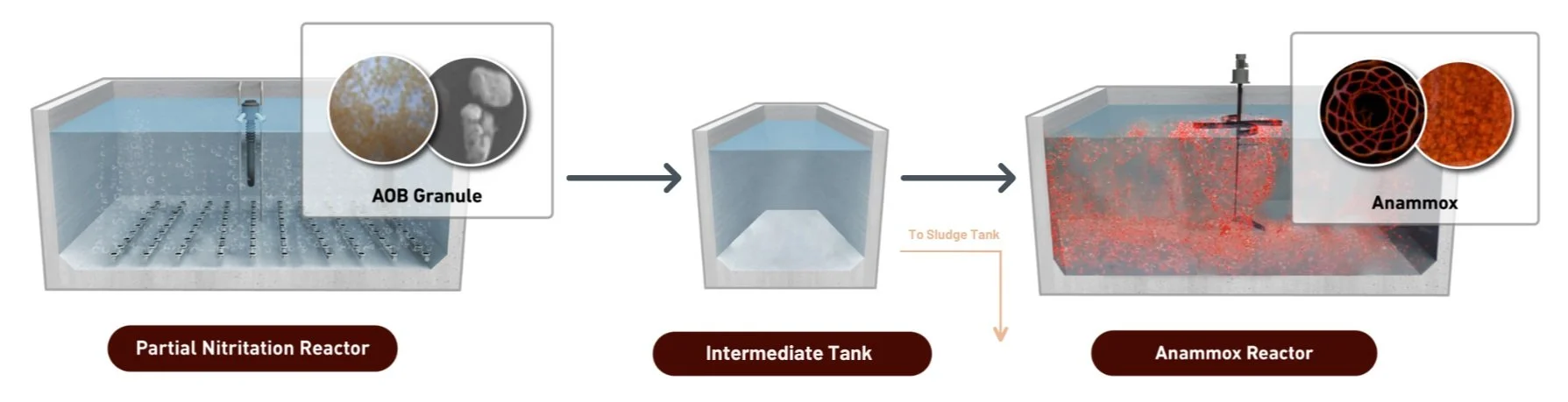
Process Overview

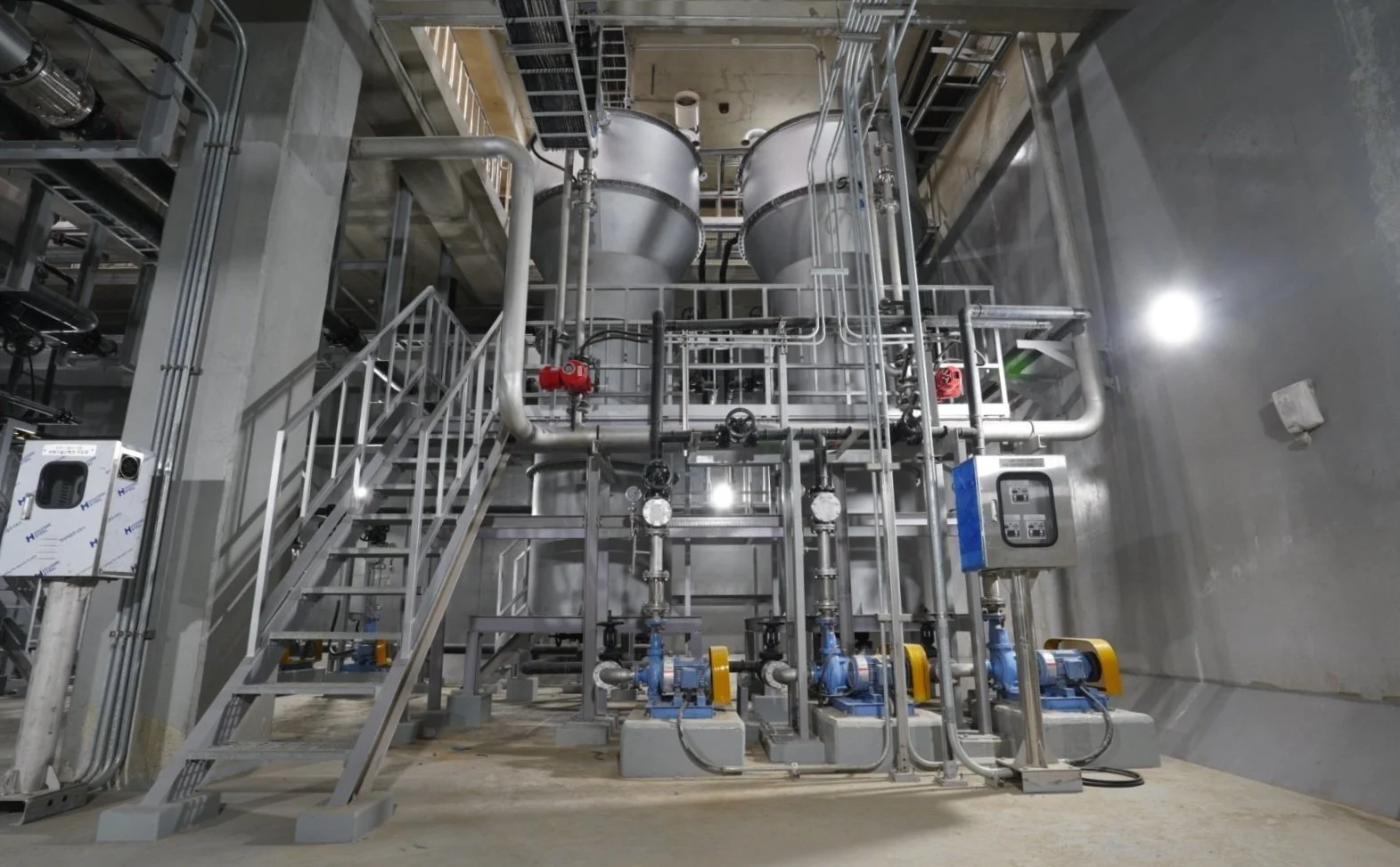
Partial Nitritation Reactor
Partial Nitritation using dense ammonia oxidizing bacteria (AOB) granules.
Operation with high MLSS (6,000 ~ 8,000 mg/L) inside the reactor
Short settling time of 20 minutes (SVI ≤ 30)
Maximizing partial nitritation efficiency with aerobic conditions

Anammox Reactor
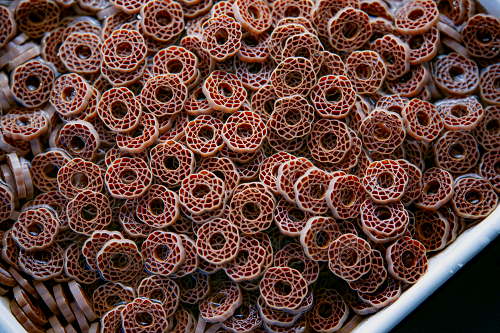
Anammox reaction with dense anammox microorganisms attached to moving bed media.
Securing high density anammox microorganisms in the reactor
Maximizing anammox reaction efficiency with anaerobic conditions
Application
Most existing single-reactor Anammox solutions are limited to side-stream municipal wastewater, but our innovative 2-Stage AMX can be adapted for industrial and high-strength wastewaters, offering greater flexibility and efficiency. Beyond wastewater treatment, our 2-Stage AMX technology is applicable to a wide range of industries, including:
-

Municipal Wastewater
-
Co-Digestion
-

Landfill Leachate
-

Livestock Wastewater
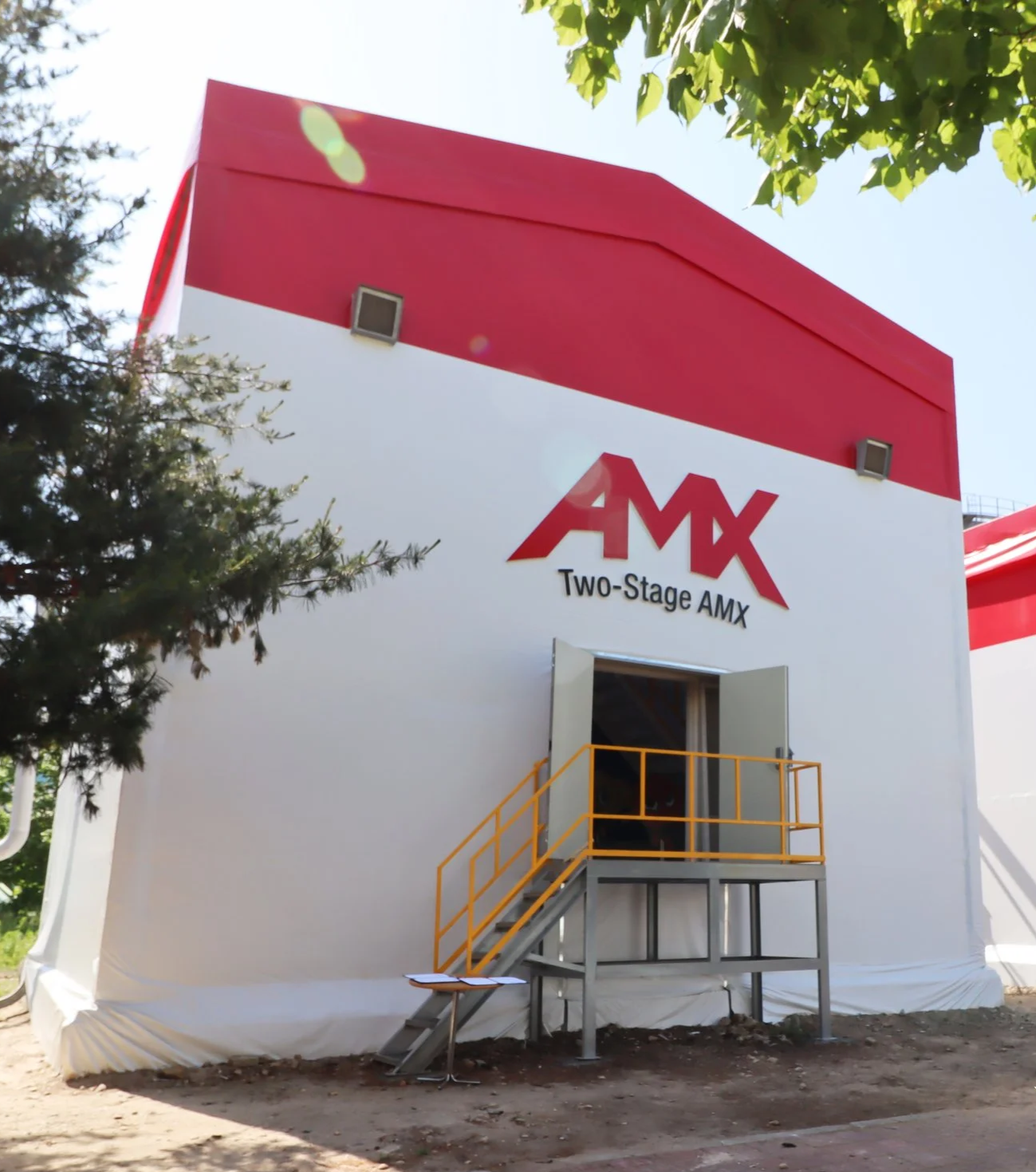
Busan Noksan Wastewater Treatment Plant
The first full-scale application of Anammox process in Korea
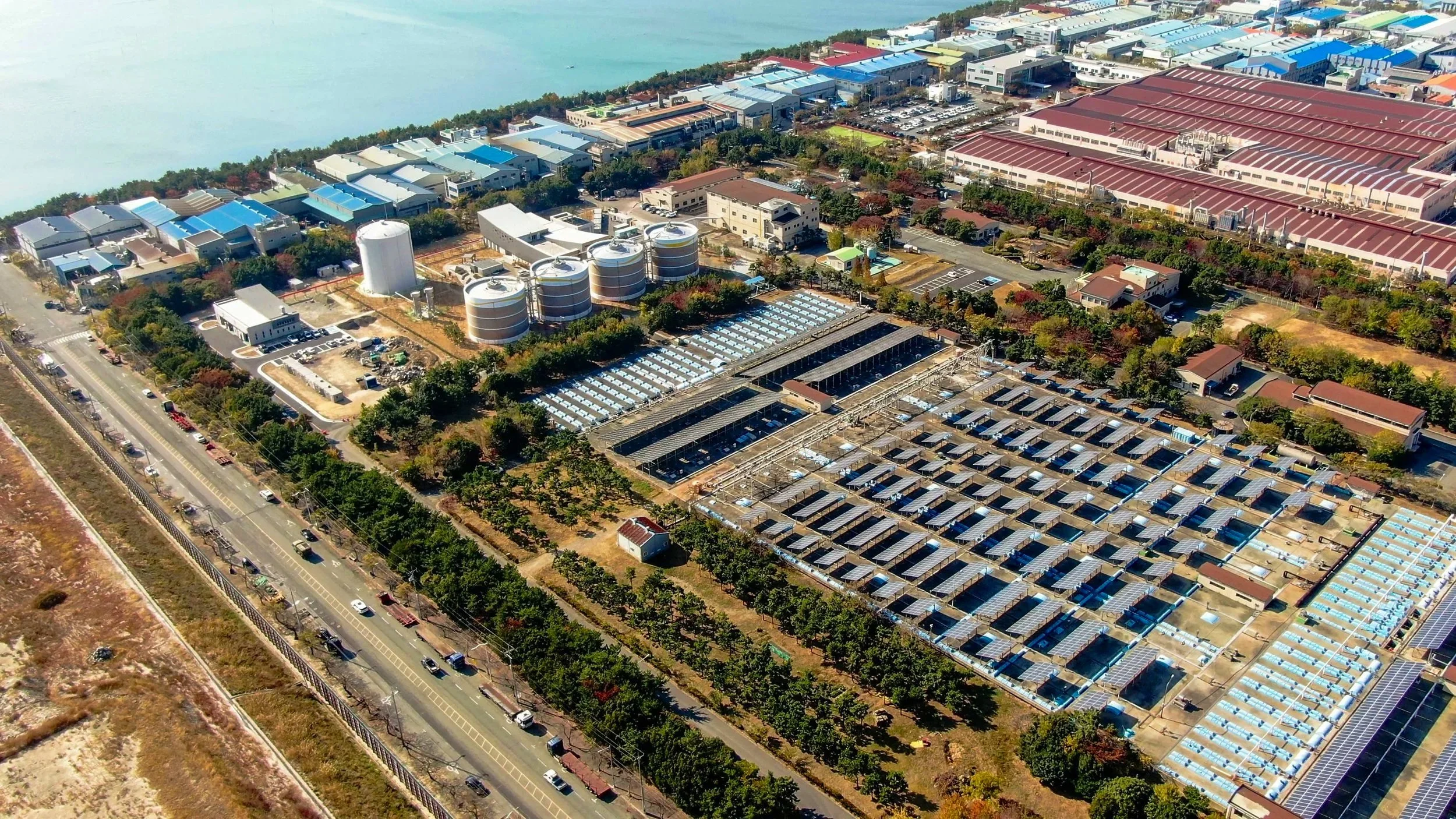
Process
Mesophilic Anaerobic Digestion + Anammox process
Capacity
Mesophilic Anaerobic Digestion: 778 ㎥/d (0.21 MGD) (Sewage Sludge : 578 ㎥/d (0.15 MGD), Food waste leachate: 200 ㎥/d (0.06 MGD)
Anammox : 780 ㎥/d (0.21 MGD)
* Based on WWTP design influent flow (184,000 ㎥/d, 48.6 MGD)
Press Release: Provided by the City of Busan, Korea
Operation Cost Comparison
| Division |
Noksan Sewage Treatment Plant 2-Stage AMX |
Suyeong Sewage Treatment Plant Conventional BNR |
Gangbyeon Sewage Treatment Plant Conventional BNR |
|---|---|---|---|
| Electrical Cost (USD/yr) | 137,340 | 206,000 | 212,000 |
| Chemical Cost (USD/yr) | 8,760 (chemical for pH control) | 368,157 (external carbon source) | 472,433 (external carbon source) |
| Total Operating Cost (USD/yr) | 146,100 | 574,157 | 684,433 |
| Total Operating Cost per Nitrogen Removed (USD/kg-N) | 0.51 | 3.23 | 3.00 |
84% Reduction in Operating Cost
Total Operating Cost Comparison per Nitrogen Removed (USD/kg-N)
Construction Cost and Footprint Comparison
| Division |
Noksan Sewage Treatment Plant 2-Stage AMX |
Suyeong Sewage Treatment Plant Conventional BNR |
Gangbyeon Sewage Treatment Plant Conventional BNR |
|---|---|---|---|
| Required Area (m²/kg-N) | 0.52 | 7.13 | 1.86 |
| Required Volume (m³/kg-N) | 2.26 | 32.51 | 6.28 |
| Civil Construction Cost (USD/kg-N) | 565.2 | 8,129 | 1,570 |
* Civil construction cost of USD 250 / ㎥ applied
Construction Cost Reduced by
93% (Suyeong) & 64% (Gangbyeon)
Applying AMX reduces footprint and hence civil construction cost
AMX® Pilot Unit:
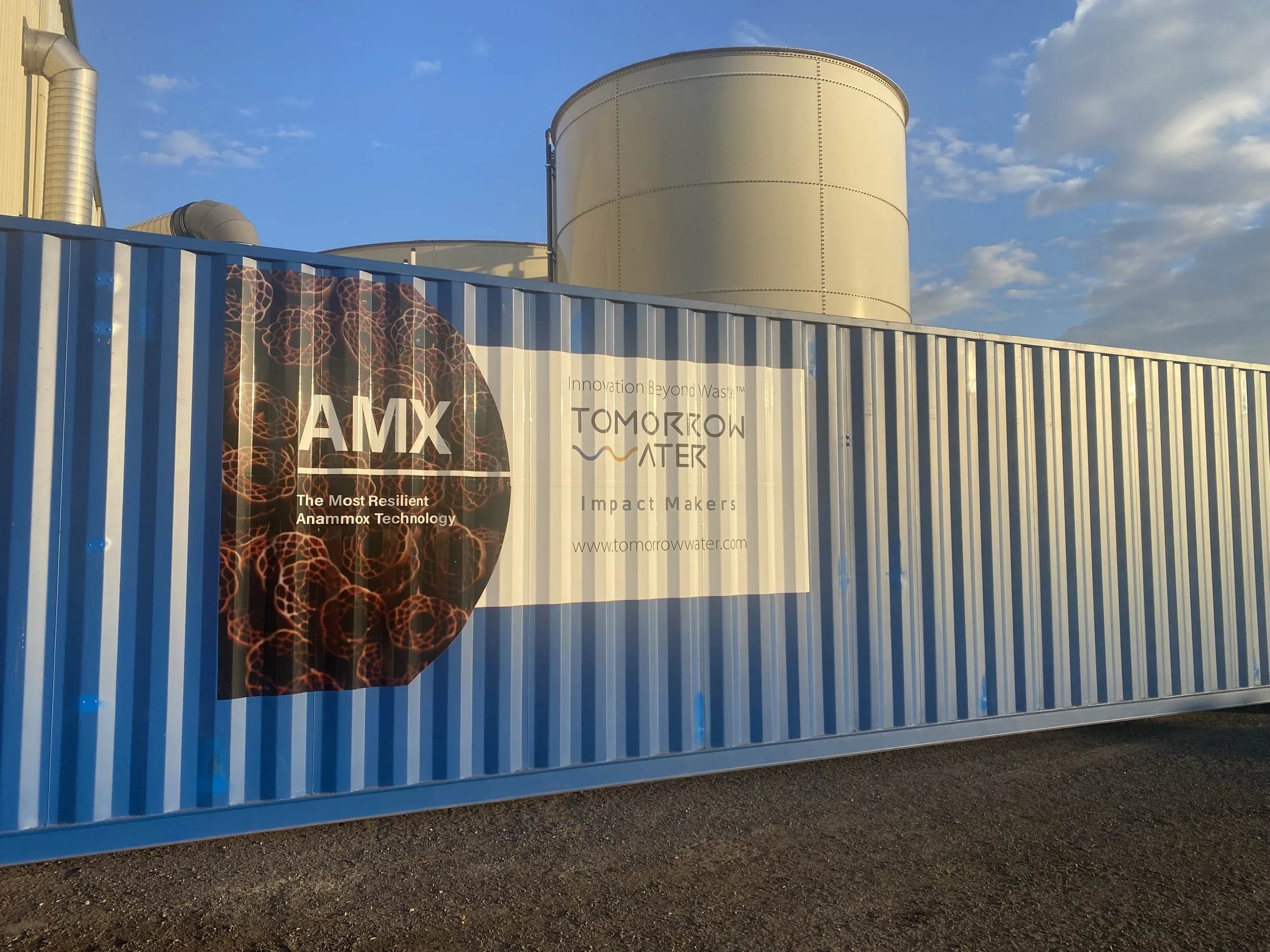
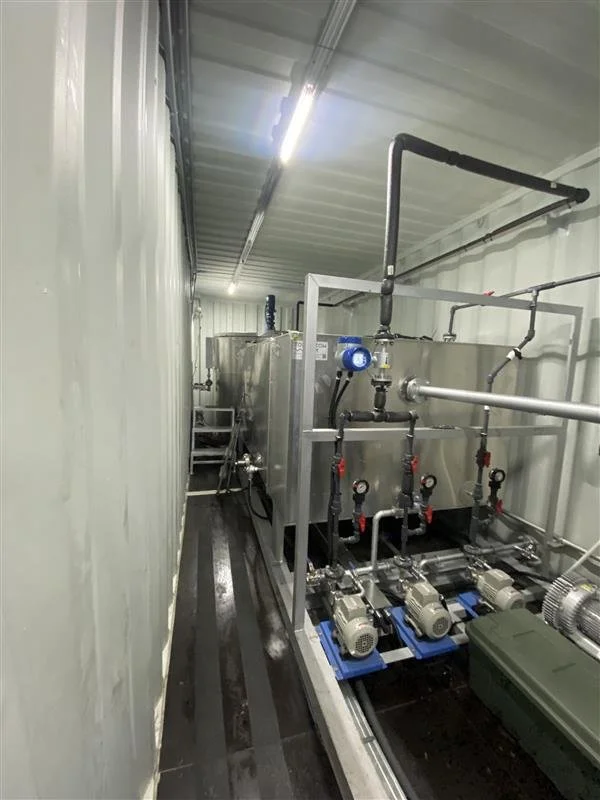
Dimensions:
Container: 40’ L x 8’ W x 9’ H
Additional Space for Feed Tank, Effluent Tank, & Chemical Dosing Systems: 32’ x 8’
| Capacity | |
|---|---|
| Ammonia Concentration (mg/L as N) |
Projected Pilot Capacity (GPD) |
| 1,000 | 1,000 |
| 1,500 | 630 |
| 2,000 | 500 |
| 2,500 | 400 |
| Client Connections | |||
|---|---|---|---|
| Description | Connection Type | Material | |
| C-1 | Influent Water Inlet | 2”, ANSI, Class 150 | PVC Sch80 |
| C-2 | Effluent Water Outlet | 2”, ANSI, Class 150 | PVC Sch80 |
| C-3 | Electrical | 480VAC, 3PH, 63A | N/A |
Instrumentation
Chemical dosing tanks & pumps
Control panel with 15’’ HMI Screen (Panel rated NEMA 4X)
Assembled inside 40 ft shipping container. Chemical totes, chemical dosing pumps, one influent & effluent tank will be located outside the container
Feed & sludge pump
PN & Anammox Reactor Tanks
Process air blowers & aeration diffusers
Instrumentation
Manual & automatic valves
Equipments:
AMX® Reference
| Site | Application | Country | Capacity | Comments |
|---|---|---|---|---|
| Noksan STP (Busan) | Side-Stream (Digester Centrate) | Korea | 780 m³/d | Operating (2023) |
| Daejon STP (Old Plant) | Side-Stream (Digester Centrate) | Korea | 600 m³/d | Operating (2018) |
| Daejon STP (New Plant) | Side-Stream (Digester Centrate) | Korea | 1440 m³/d | Under Construction (2028) |
| Gangbyeon STP (Busan) | Side-Stream (Digester Centrate) | Korea | 70 m³/d | Completed (Anammox Farm for Noksan) |
| Daegu City STP | Side-Stream (Codigestion) | Korea | 30 m³/d | Operated (2021-2022) |
| Hongcheon | Livestock/Food Waste Digestate | Korea | 2.6 m³/d | Completed Pilot Plant |
| Muan City | Food waste | Korea | 90 m³/d | In Design (2026) |
| Goesan City | Food Waste | Korea | 280 m³/d | In Design (2026) |
| Sudokwon Landfill (Incheon) | Landfill Leachate | Korea | 2 m³/d | Completed Pilot Plant (2020) |
| JWPCP | Main-Stream | USA | 40 m³/d | Completed Demo Plant (2015) |
| Hyperion Water Reclamation Plant (California) | Main-Stream | USA | 40 m³/d | Completed Demo Plant (2022) |
| Hyperion Water Reclamation Plant (California) | Side-Stream (Digester Centrate) | USA | 1 m³/d | Completed Demo Plant (2021) |
| Bos Dairy Farm (Indiana) | Livestock Digestate | USA | 1 m³/d | Completed Demo Plant (2018) |
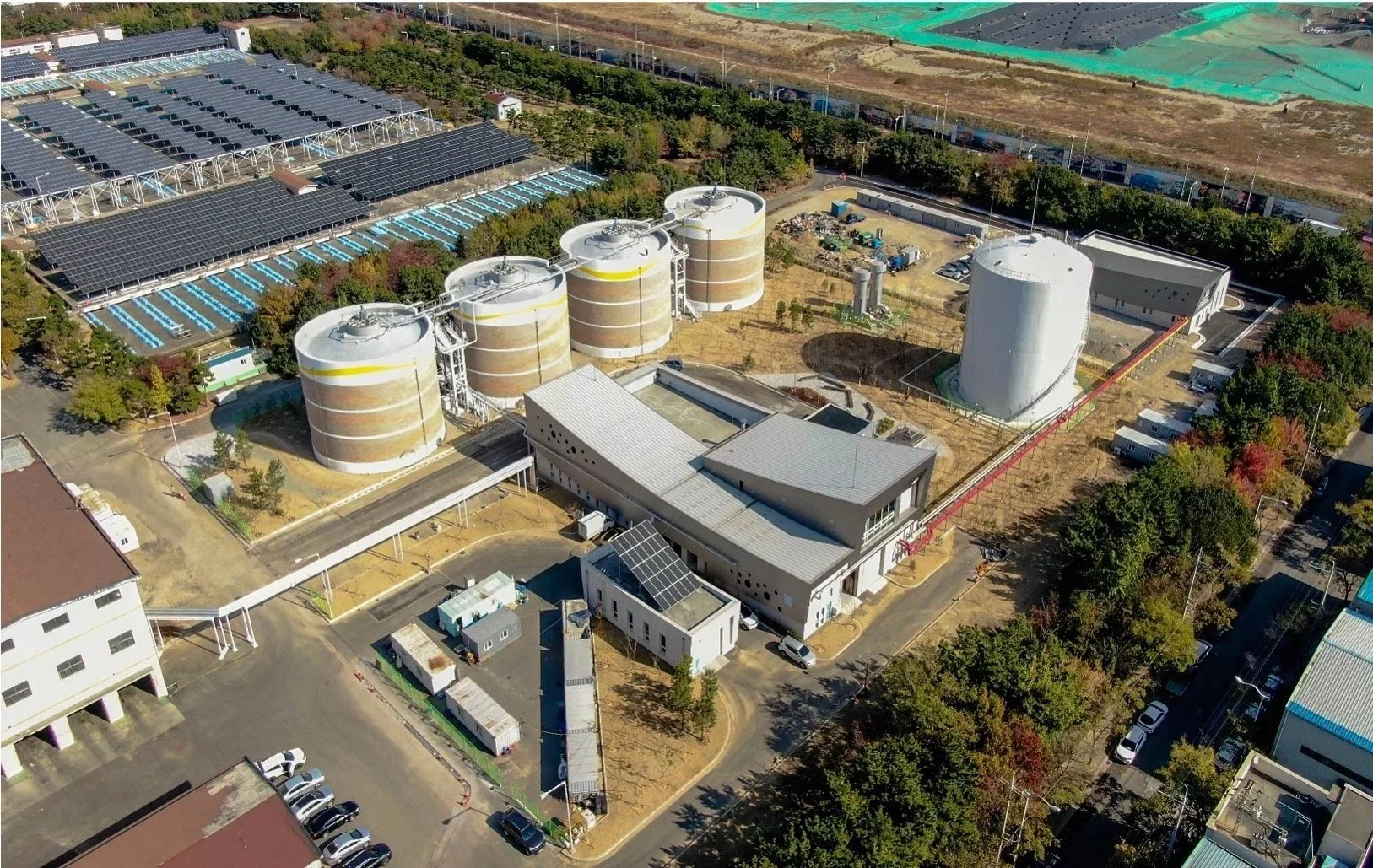
Busan Noksan Wastewater Treatment Plant
The first full-scale application of Anammox process in Korea
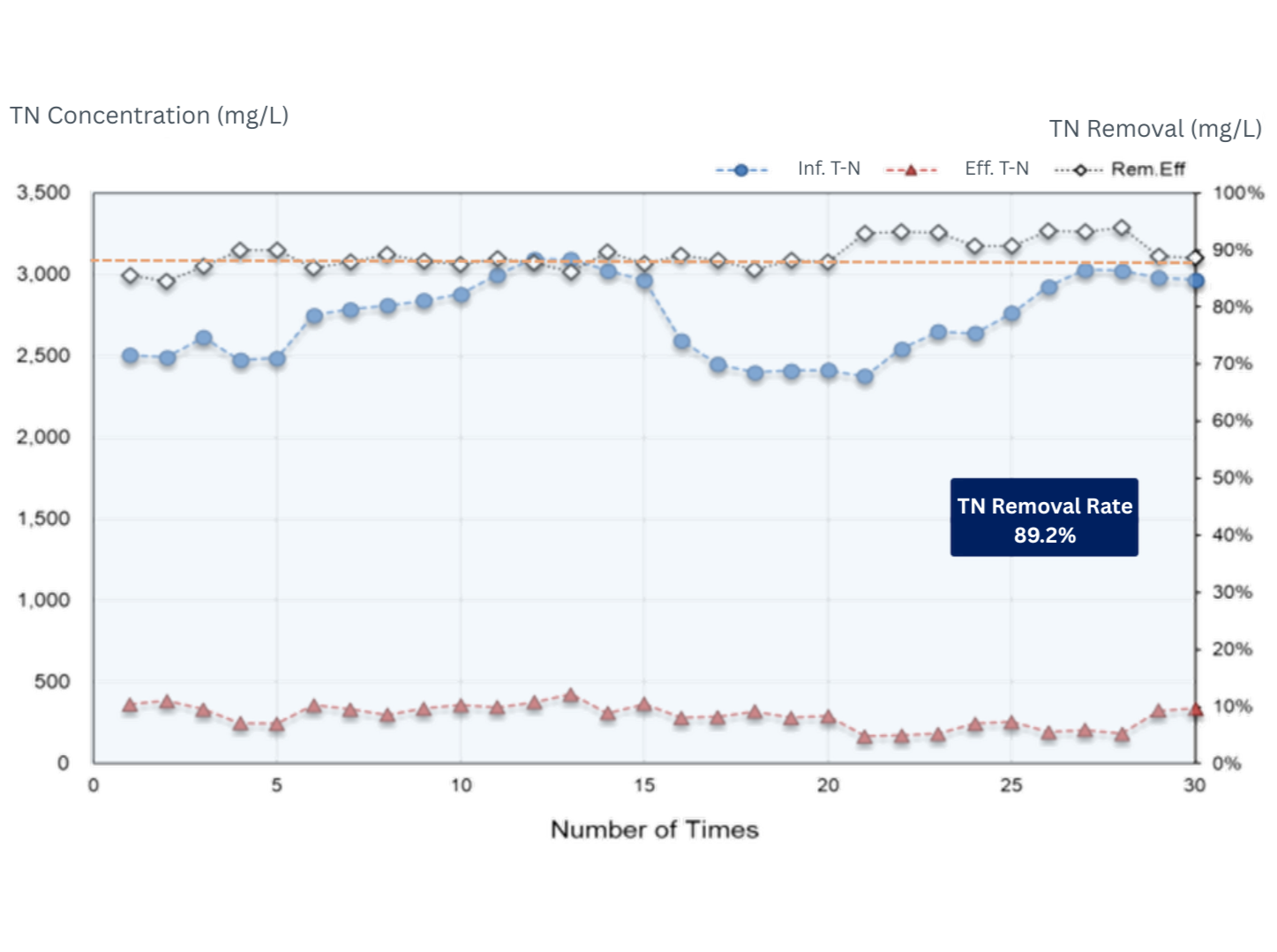
By implementing AMX® in Noksan STP, Busan, Korea, the civil construction cost was reduced by 93% compared to Suyeong STP and 64% compared to Gangbyeon STP. Additionally, operating costs were reduced by 84%.
| Busan Noksan Wastewater Treatment Plant
Target Wastewater: Sewage Sludge & Anaerobic Digestate from food waste
| Process
Mesophilic Anaerobic Digestion + Anammox process
| Capacity
Mesophilic Anaerobic Digestion:
778 ㎥/d (0.21 MGD) (Sewage Sludge : 578 ㎥/d (0.15 MGD)
Food waste leachate: 200 ㎥/d (0.06 MGD)
Anammox : 780 ㎥/d (0.21 MGD)
* Based on WWTP design influent flow (184,000 ㎥/d, 48.6 MGD)

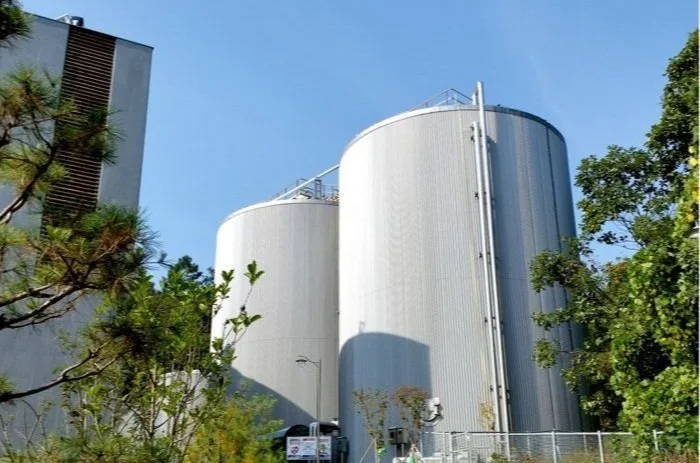
Hongcheon Co-Digestion Plant
Energy Independence Through Livestock Manure and Digestate
Hongcheon was able to gain energy independence and was designated as an Eco-Energy Town by the Korean Ministry of Environment with the help of Tomorrow Water’s AMX®.
| Hongcheon Eco-Friendly Energy Town
| Process
Organic waste → Pretreatment → Anaerobic digestion → Biogas production
Dewatering centrate → BCS reactor → Dissolved air flotation (DAF) → Integrated with Hongcheon Wastewater Treatment Plant
| Capacity
100㎥/day: 80㎥ Livestock + 20㎥ Food Waste
FAQs
Can AMX® be retrofitted to existing wastewater plants?
Yes! AMX® can be integrate in side-stream processes with proper design adjustments depending on wastewater characteristics and available infrastructures.
How long does it take to start up an Anammox reactor?
Startup depends on the inoculum and conditions. Traditional Anammox systems may take 2–6 months but using enriched Tomorrow Water’s Unique Anammox Species: Candidatus Brocadia sinica, anammox biofilm carriers can shorten startup to 4–8 weeks.
How is the process monitored?
Key parameters include ammonium, nitrite, nitrate, pH, and temperature. The whole AMX® process is automated and monitored by online analyzers.
What is the expected sludge production?
Anammox generates minimal biomass compared to conventional nitrification-denitrification systems—typically 10–20% of conventional activated sludge production, reducing disposal costs.
Talk to our product owner.
HI I’M
UMESH
GHIMIRE
AMX Product Owner, Ph.D.

ug@tomorrowwater.com
1225 N Patt St
Anaheim, CA 922801