


Wastewater treatment plants play a dual role: they provide sanitation functions to protect people and natural purification functions to safeguard the environment. It is widely recognized that over the past 160 years, wastewater treatment plants have contributed more to human lifespan extension than vaccines and antibiotics.
Tomorrow Water aims to expand the adoption of wastewater treatment facilities and ensure their sustainability, thereby contributing to human well-being and fostering business growth. We have long been engaged in the "Tomorrow Water Project", which transforms wastewater treatment plants from cost centers into profit-generating assets. Our efforts focus on minimizing operational costs by utilizing the smallest space possible and simplifying maintenance to enhance sustainability. The most notable result of these efforts is our proprietary Proteus technology.
What is Proteus?
Typical wastewater treatment processes consist of Primary treatment, which primarily removes suspended solids, and Secondary treatment, which employs biological processes to eliminate organic matter and nutrients such as nitrogen and phosphorus. Depending on national and regional regulations, various effluent standards and specific requirements exist. For example, recent demands have increased for wet weather flow management and biogas plants based on anaerobic digestion, driven by climate change. Proteus is a bio-filtration-based wastewater treatment technology that combines physical filtration and biological treatment techniques. It employs a packed bed reactor filled with floating media, enabling simultaneous or selective filtration and biological treatment.
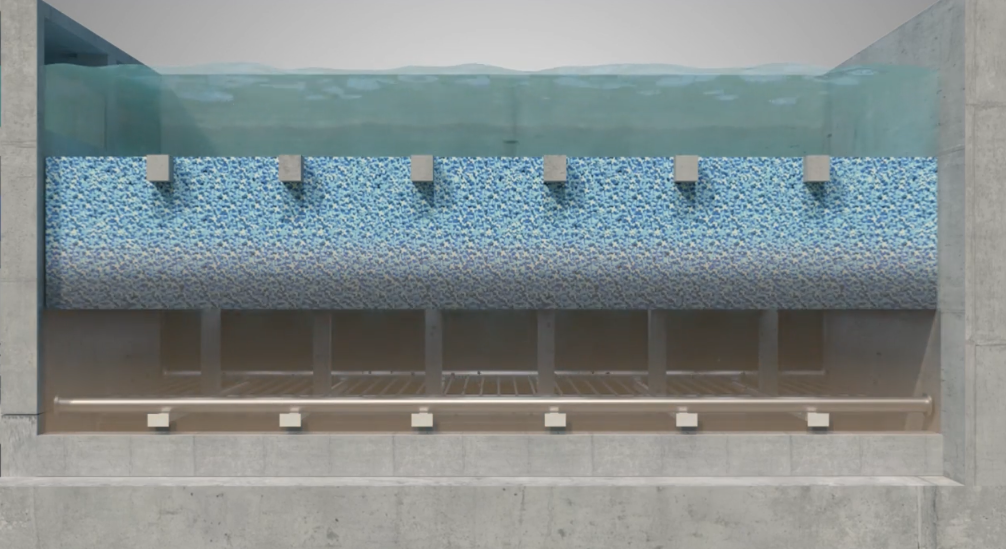
Achieving optimal performance requires precise engineering adjustments, such as media size, bed depth, flow rates, and oxygen supply, tailored to customer needs. For instance, in primary treatment aiming to maximize suspended solid removal, larger media without oxygen supply are used to trap more solids within the media bed. Conversely, in secondary treatment, where solid concentrations are lower, smaller media are employed to increase microbial attachment and biological activity.
Proteus offers various models tailored to specific needs: Proteus Primary for solid separation, Proteus Plus for combined removal of solids and organics along with nitrification within a single reactor, and Proteus NDN, which is specialized for nitrogen removal from wastewater, groundwater, and RO concentrate.
Tomorrow Water specifically highlights its most differentiated technologies in the U.S. market: Proteus Primary, an advanced primary treatment system, and Proteus Plus, which simultaneously performs primary and secondary treatments within a single reactor. In the primary stage, we utilize Proteus Primary to maximize solid separation and direct suspended solids to the anaerobic digester, thereby maximizing biogas production while minimizing oxygen consumption in subsequent biological treatment processes. Due to excessive organic removal, the low C/N ratio presents challenges for traditional biological nitrogen removal processes caused by a shortage of carbon sources.
We are actively working to address this issue through innovative technologies such as PdNA (Partial denitrification with Anammox) and mainstream Anammox.

PROTEUS
Proteus is a biofiltration technology that combines physical filtration and biological treatment, providing a versatile solution for wastewater management.
Proteus, when enhanced with physical filtration, excels in primary treatment and Wet Weather Flow by effectively removing suspended solids.
Furthermore, when Proteus is prioritized for biological treatment, particularly through the BNR process, it significantly enhances the performance of secondary and tertiary treatment, while also improving groundwater remediation efforts.
This adaptability and efficiency set Proteus apart in the wastewater industry, offering tailored solutions to meet diverse treatment needs.
“We need these new options to meet the challenges of the future.”
Highlighted Proteus Models
Proteus Primary
With increasing frequency of heavy rainfall due to climate change, managing wet weather flow has become a critical issue for existing treatment plants.
In the United States, where sanitation standards are especially stringent, releasing untreated sewage into water bodies is a sensitive issue linked to viral spread. It is standard practice to perform primary treatment and disinfection before discharge. However, expanding existing primary capacity is often hampered by limited site space and high capital costs.
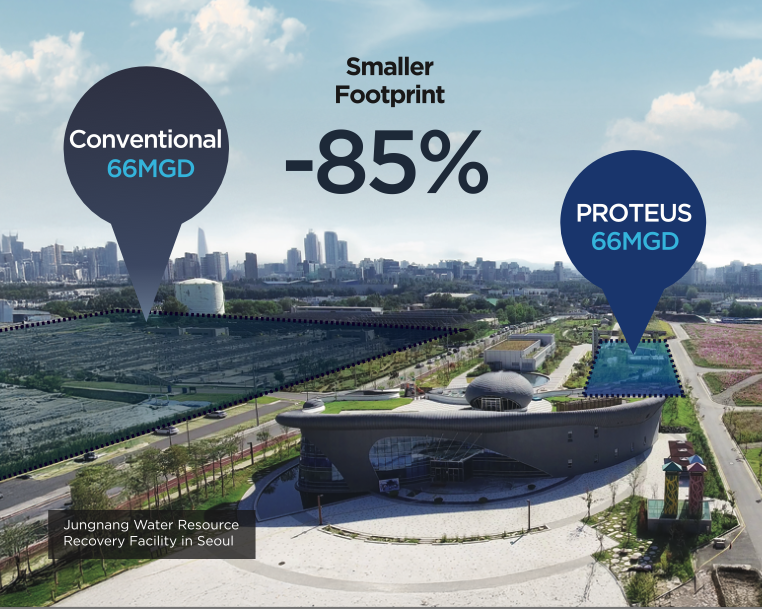
Proteus Primary addresses these challenges by requiring only about 15% of the footprint of conventional gravity-based clarifiers and achieving higher total suspended solids (TSS) removal rates without chemical additives (ref. CWT's CEC report). Its maintenance requirements are minimal, and it effectively prevents clogging issues caused by wet tissues, making it an advanced primary solution recognized for operational simplicity and robustness.
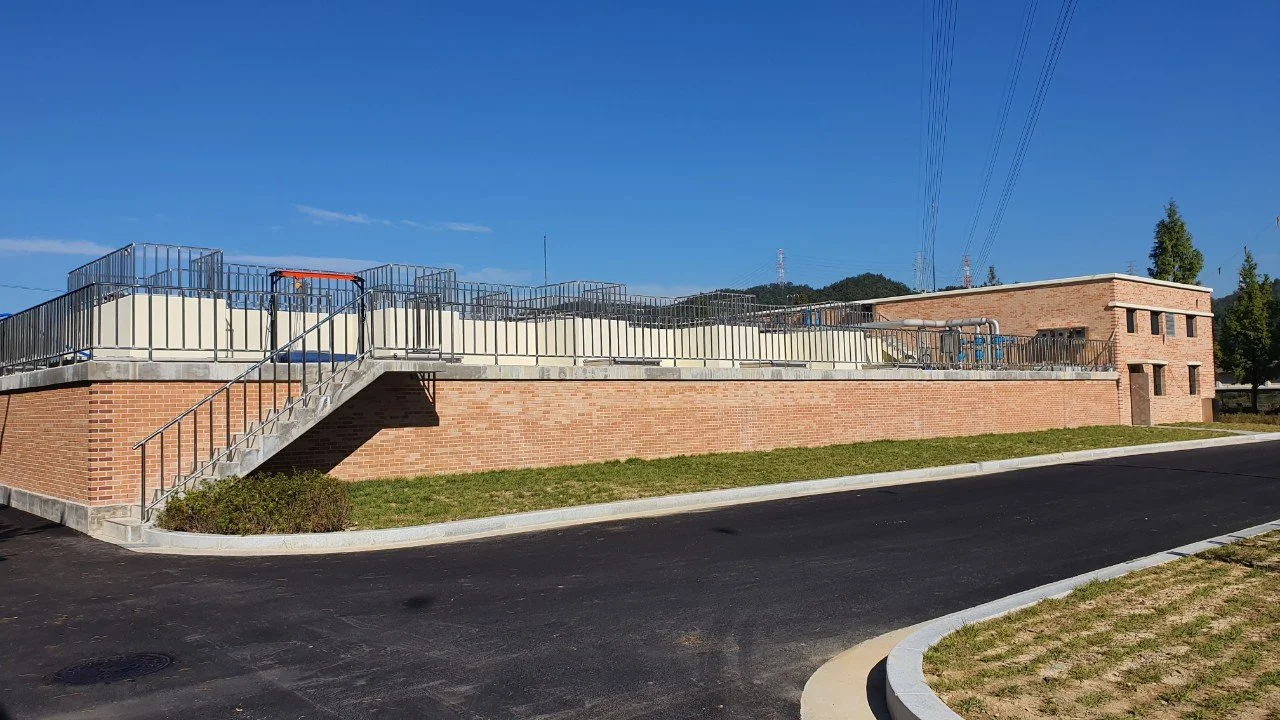
We successfully implemented Proteus Primary in Korea for 66 MGD and 95 MGD capacity facilities, including wet weather flow and primary treatment setups, and are currently testing and designing projects in Milwaukee and Cincinnati. The substantial reduction up to 85% in required footprint makes it an ideal alternative for plants needing additional space for other purposes like data centers, enabling creative and profitable repurposing of plant sites.
Proteus Plus
Most wastewater treatment plants on the U.S. West Coast spend approximately 4–8 hours performing primary solids removal and secondary treatment for organics and nitrification.
Proteus Plus on the other hand consolidates primary and secondary processes into a single reactor, reducing treatment time to roughly 2–4 hours depending on influent characteristics. This significantly reduces footprint and infrastructure costs resulting from shorter treatment durations and the elimination of separate treatment basins.
Achieving organic removal and nitrification in a single reactor requires efficient oxygen transfer efficiency (OTE) to maintain optimal aerobic conditions. Oxygen transfer is the largest single energy consumer in biological treatment processes with typically 50–70% of a plant’s total energy demand. However, conventional aeration systems often achieve OTE values in the range of 15–25%, while optimized packed-bed biofilm systems like Proteus Plus can achieve 35–45% OTE due to extended gas–liquid contact and enhanced biofilm activity.
This high OTE directly can translates into:
Lower operating costs (reduced blower energy requirements)
Stable nitrification performance even under variable loads
Reduced greenhouse gas footprint, supporting climate compliance goals
Current testing of Proteus Plus in numerous municipal facilities has demonstrated:
>80% COD removal and complete nitrification in a single consolidated reactor
Stable operation under both dry and wet weather conditions
Up to 60% observed OTR and OTE compared to conventional activated sludge systems
These results continue to validate Proteus Plus as a stand-alone technology with no comparable technologies. It does not only reduce space and time requirements but also substantially improves process efficiency, making it a scalable solution for utilities facing both environmental and economic pressures.
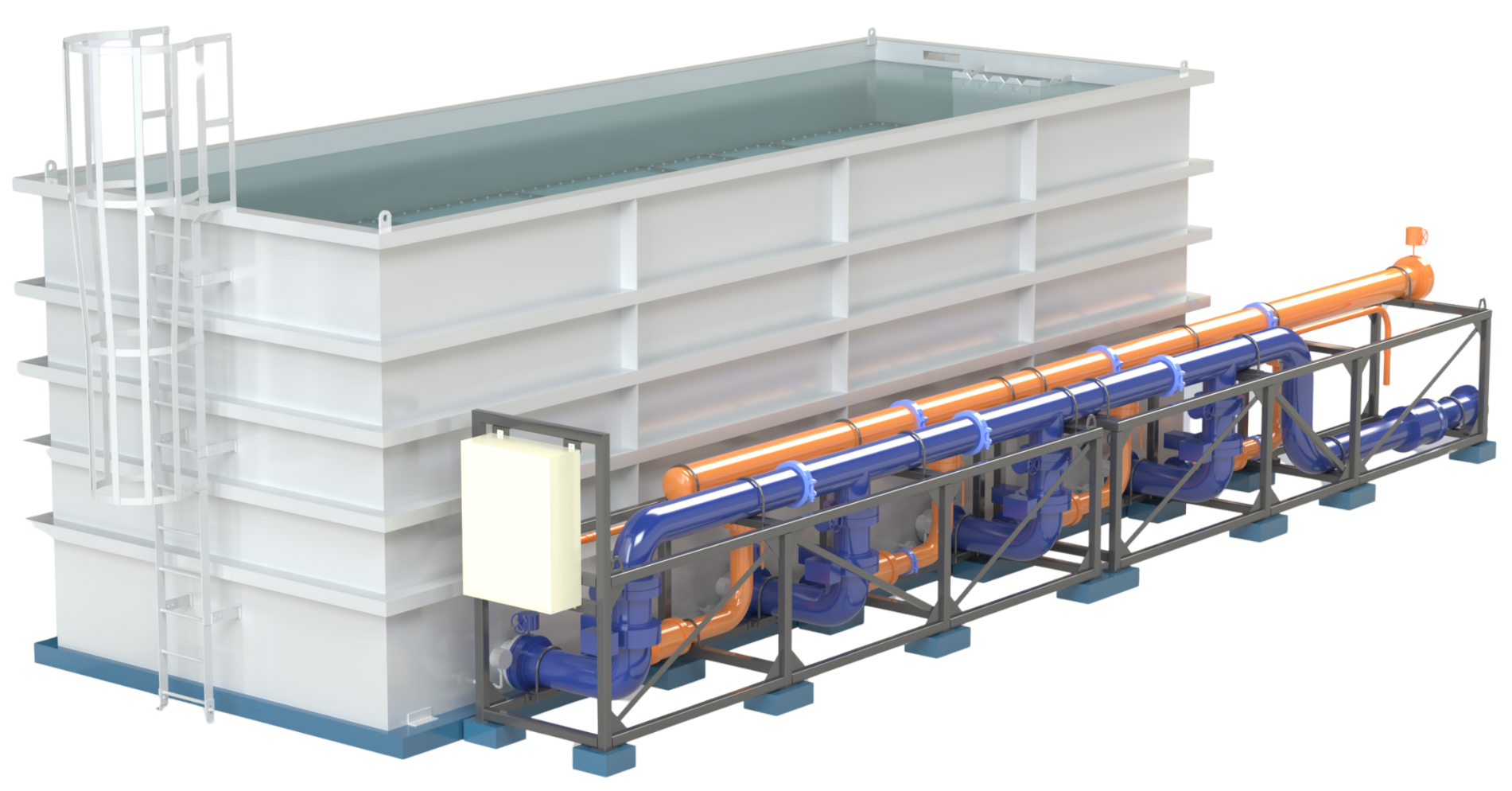
The Proteus® Primary Package
A compact, modular primary treatment package designed for high‑rate performance and wet‑weather resilience.
PROTEUS CHARACTERISTICS
| Solution | Proteus Primary | Proteus+ | Proteus NDN |
|---|---|---|---|
| Treatment Principle | Physical Filtration: Removal of suspended solids | Physical Filtration: Removal of suspended solids Biological Treatment: Removal of dissolved organic matter |
Physical Filtration: Removal of suspended solids Biological Treatment: Removal of organic matter and nutrients |
| Application Area | Primary Treatment Wet Weather Flow Carbon Diversion |
Wet Weather Flow Public Sewage Treatment |
Secondary Treatment Tertiary Treatment Groundwater Remediation RO Concentrate Treatment |
| Filtration Speed | 20~25 m/hr | 15~20 m/hr | 5~10 m/hr |
| Target Water Quality | BOD/SS less than 50~60 mg/L | BOD/SS less than 40 mg/L | TN less than 10~15 mg/L |
| Components | Strainer Block Floating Media |
Strainer Block Floating Media Diffuser |
Strainer Block Floating Media Diffuser |
VERSATILE
-
PROTEUS PRIMARY
Retrofit old conventional primary clarifiers to save space, increase capacity and upgrade processes by grabbing more solids upstream of aeration basins and sending them to digestors for maximum energy efficiency.
-
PROTEUS WET WEATHER FLOW
With continuous aeration capabilities and no settling required, the system can manage high peaking factors and variable flow rates, simplifying the treatment of dilute flows.
-
PROTEUS SECONDARY
Achieve higher water quality standards and comply with effluent discharge limits with a range of secondary treatment functions, such as BOD reduction, nitrification, and denitrification.
-
PROTEUS TERTIARY
Configurable to operate under various water quality conditions and achieve stable water quality for reuse applications or alternatives to water resources.
-
GROUNDWATER
The Proteus biofiltration process is highly effective at remediating contaminants such as nitrate, perchlorate, and organics to meet Federal Maximum Contamination Level (MCL).
-
RO CONCENTRATE
RO Concentrate Treatment with Proteus leverages a biofiltration technology that efficiently removes high concentrations of nitrogen and other pollutants without requiring sedimentation tanks, minimizing land use and lowering construction and maintenance costs.
INNOVATIVE

PHYSICAL & BIOLOGICAL TREATMENTS
USING A SINGLE UP-FLOW REACTOR
Influent wastewater enters through a header box and flows by gravity into the bottom of the Proteus filter
Influent flows upwards through a packed bed of Proteus media beads, where particulates are trapped, and through a strainer box that retains the media
Oxic/anoxic conditions can be designed based on the location of air diffusers relative to the floating media
A layer of filtered effluent is stored in the top of the reactor as backwash water. The filter media is backwashed by gravity (no pumping) using only its own effluent.
Filtered water leaves the Proteus filter with reduced TSS and BOD and continues to the next stage in the treatment process
2D vs 3D Filtration
Traditional filtration systems rely on treatment at a single, flat surface (2D) limiting performance when conditions change. Proteus takes a fundamentally different approach, operating across the full depth and volume of the media bed for true three‑dimensional (3D) treatment.
This design enhances resilience to fluctuating flows, maintains consistent performance during wet weather events, and prevents clogging before it becomes a problem. The result is reliable primary treatment without the need for routine high‑pressure cleaning or intensive maintenance.
-

PROTEUS PLUS
The upgraded Proteus Plus configuration adds a layer of aerated biofilm for high-rate biological treatment which does not require chemicals or redirection of biomass.
-

PATENTED EPP MEDIA
The expanded polypropylene (EPP) media design provides the ideal surface area to build biofilm for high solids loading rates.
-
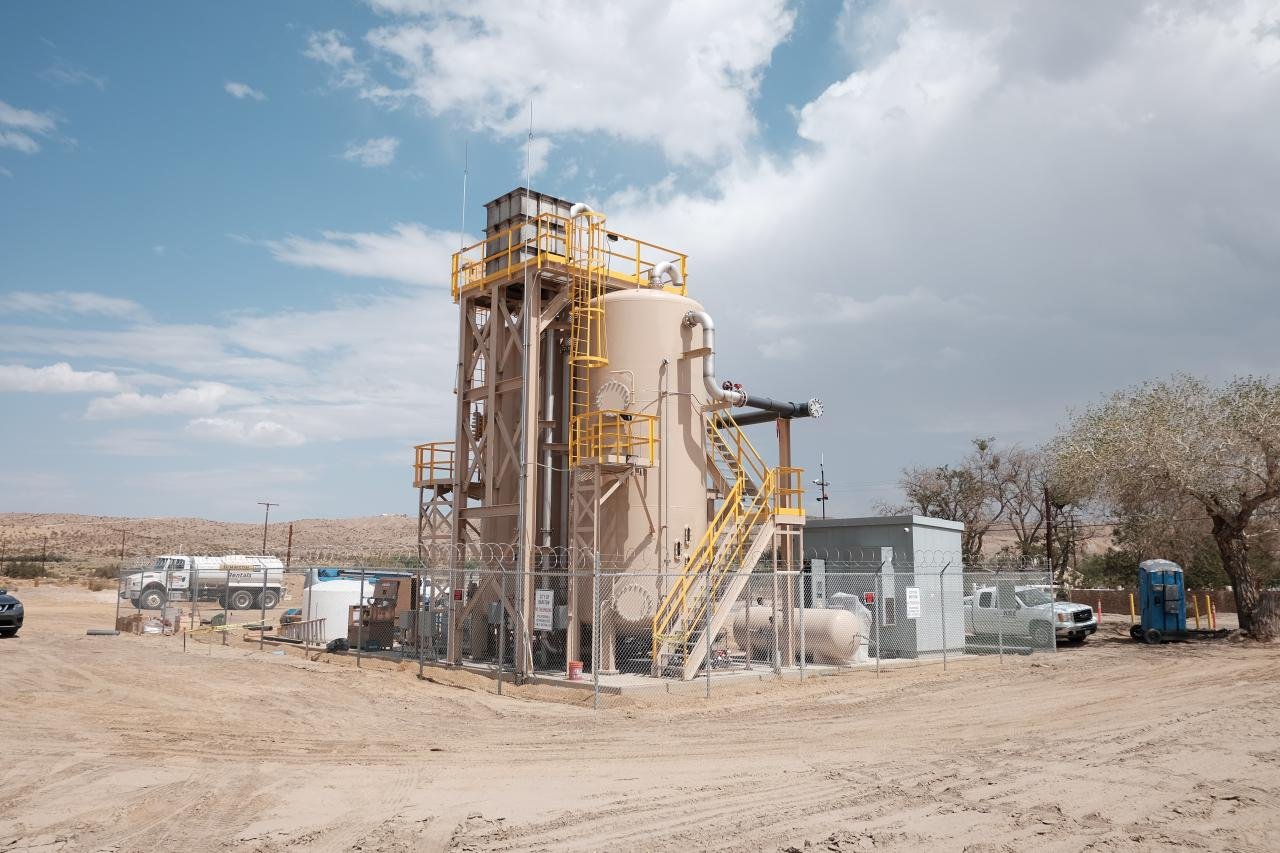
PRE-ENGINEERED SOLUTIONS
Easy construction option for management of primary wet weather flows, capacity increase, or as a tertiary bolt-on for nutrient control.
PROVEN
-
![]()
TITLE 22 CERTIFICATION
-
![]()
LIFT INNOVATIVE TECHNOLOGY
-
![]()
SIMULATION MODELING
-
![]()
PILOT PROGRAM AWARD

Featured Proteus References


Talk to our product owner.
HI I’M
VICTORY
DSANE


PROTEUS Product Owner, Ph.D.
vd@tomorrowwater.com
1225 N Patt St
Anaheim, CA 922801
Barstow Groundwater Remediation