


AMX®
Livestock Wastewater Treatment
Efficient, Resilient, Compliant — AMX® for Agricultural Wastewater
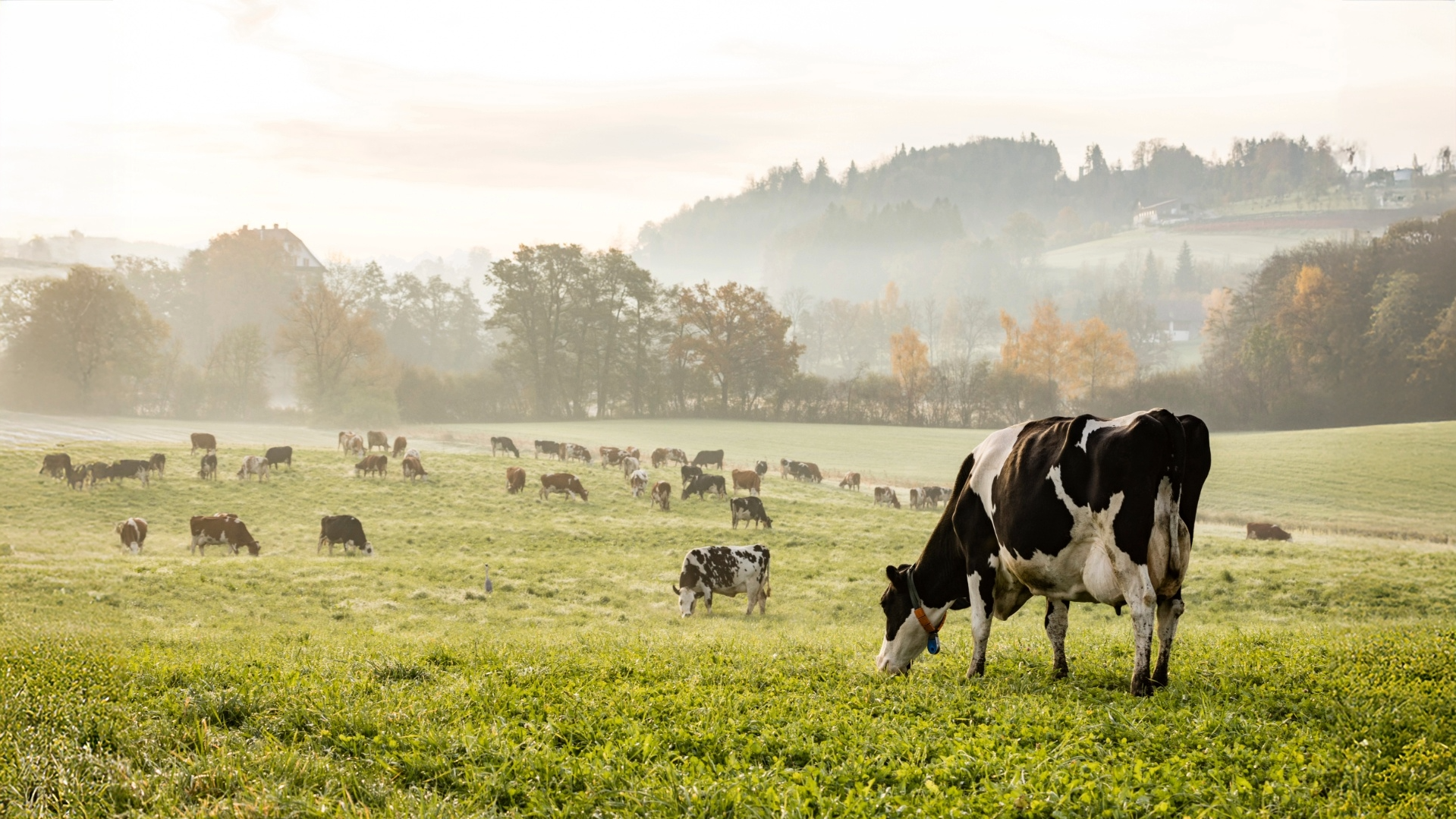
Livestock operations, especially large dairies, generate high-strength wastewater rich in nitrogen, phosphorus, and solids. These nutrients, if discharged untreated, can lead to eutrophication, groundwater contamination, and regulatory penalties.
First Deployment of AMX® on Dairy Digestate
Case Study: Boss Dairy Pilot Project
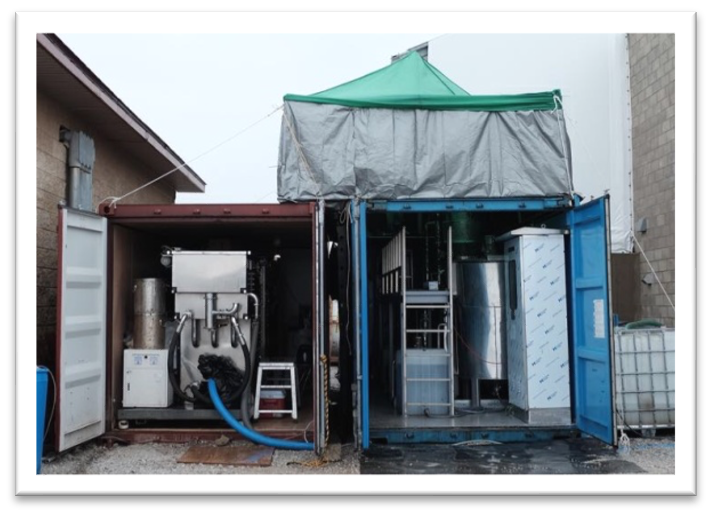
In 2018, Boss Dairy partnered with Tomorrow Water to explore the first-ever application of 2-Stage AMX® technology on centrifuge effluent from dairy digestate. The pilot aimed to drastically reduce nitrogen and phosphorus while handling high total suspended solids (TSS).
The Challenge
Seasonal NH₄ peaks — Summer temperatures pushed NH₄ up to 1,800 mg/L.
Fluctuating wastewater composition — Daily variability made process tuning complex.
Solids overloading — TSS often >20,000 mg/L, threatening AMX® biomass stability.
Foam formation — Aeration tanks developed large foam layers, impairing oxygen transfer.
No operational precedent — This was the first documented attempt to run AMX® on dairy digestate.
| Parameter | Influent (avg) |
|---|---|
| TSS | >20,000 mg/L |
| NH₄-N | 1,600–1,800 mg/L |
| TP (PO₄-P) | ~140 mg/L |
| COD/BOD | Very high |
Boss Dairy Watewater Characteristics
Initial testing revealed the extreme strength of the wastewater. The combination of high ammonia, variable loading, and foam formation created a unique operational challenge.
Treatment Process
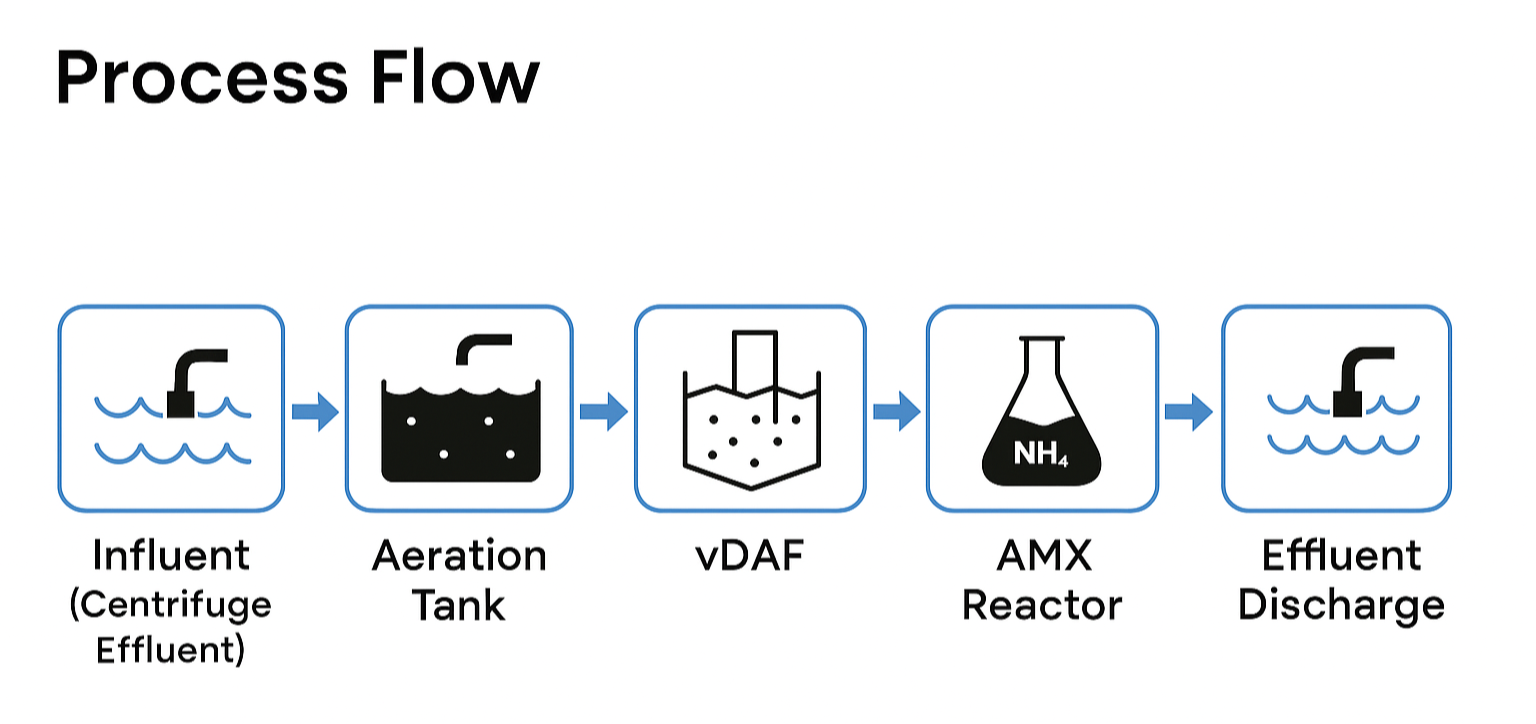
The pilot facility was designed around a two-step approach:
Step 1 – Solids & BOD Reduction
Aeration Tank: Stripped ammonia and oxidized organics.
vDAF (vortex-dissolved air flotation): Removed suspended solids to protect the AMX® reactor.
Step 2 – Nitrogen Removal
Partial Nitritation Reactor: Converted ~50% of NH₄ to NO₂.
Anammox Reactor: Used Anammox bacteria to remove nitrogen via autotrophic denitrification (NH₄ + NO₂ → N₂ gas + H₂O).
Chemical Support
pH control via acid dosing
Defoaming agents to manage aeration tank foaming
Target Effluent Goals:
Total Nitrogen (TN):
Satisfactory: <150 mg/L
Ideal: <100 mg/L
Total Phosphorus (TP):
Satisfactory: <15 mg/L
Ideal: <10 mg/L
The Results and Pilot Performance
Despite operating above design ammonia loading, the pilot delivered outstanding nutrient reductions:
NH₄ Removal: 90–95%
TN Reduction: From ~1,600 mg/L to as low as 140 mg/L
TP Reduction: From ~140 mg/L to <15 mg/L
| Stage | TSS (mg/L) | NH₄-N (mg/L) | NO₂-N (mg/L) | PO₄-P (mg/L) |
|---|---|---|---|---|
| Influent | 28,400 | 1,770 | 4 | 136 |
| After Aeration | 25,600 | 1,630 | 4 | 103 |
| After vDAF | 16,500 | 1,160 | 2 | 43 |
| After Partial Nitritation | 12,100 | 300 | 310 | 13 |
| Final Effluent (AMX) | 8,600 | 90 | 12 | 13 |
The Success of Tomorrow Water’s 2-Stage AMX®
The Boss Dairy pilot proved that Tomorrow Water’s AMX® technology can treat extreme livestock wastewater with:
>90% Nitrogen removal
<15 mg/L Phosphorus
Stable operation under overload conditions
This success positions AMX® as a game-changing, low-energy, low-carbon solution for livestock industries aiming to meet tightening nutrient regulations.
Key Success Factors
Innovative Pre-Treatment: Aeration + vDAF reduced solids to AMX-tolerable levels.
Operational Flexibility: Adjusted aeration intensity to manage ammonia stripping.
Robust AMX Biomass: Maintained stable nitrogen removal despite NH₄ > design capacity.