



Draco Sludge Slaying Thermal
Hydrolysis Process
Powerful and energy-efficient thermal hydrolysis for shrinking sludge volumes and boosting biogas production.
Integrated Thermal Hydrolysis Process for Sludge Minimization
Draco Thermal Hydrolysis is a chemical-free process for shrinking sludge volumes and boosting biogas production, saving on sludge disposal costs.
Draco’s patented multi-steam spargers and agitator provide more even heat distribution and transfer, allowing for increased efficiency and energy savings regardless of whether or not your facility has anaerobic digestors.
Applications
-
Minimize the amount of final discharged sludge by reducing it through thermal hydrolysis at the rear of the sludge dehydrator (reduction of treatment plant operating costs).
-
Simultaneous reduction of final sludge discharge and increase in biogas production through thermal hydrolysis at the rear of the anaerobic digestion tank.
-
Minimize the amount of final discharged sludge by reducing it through thermal hydrolysis at the rear of the sludge dehydrator (reduction of treatment plant operating costs).
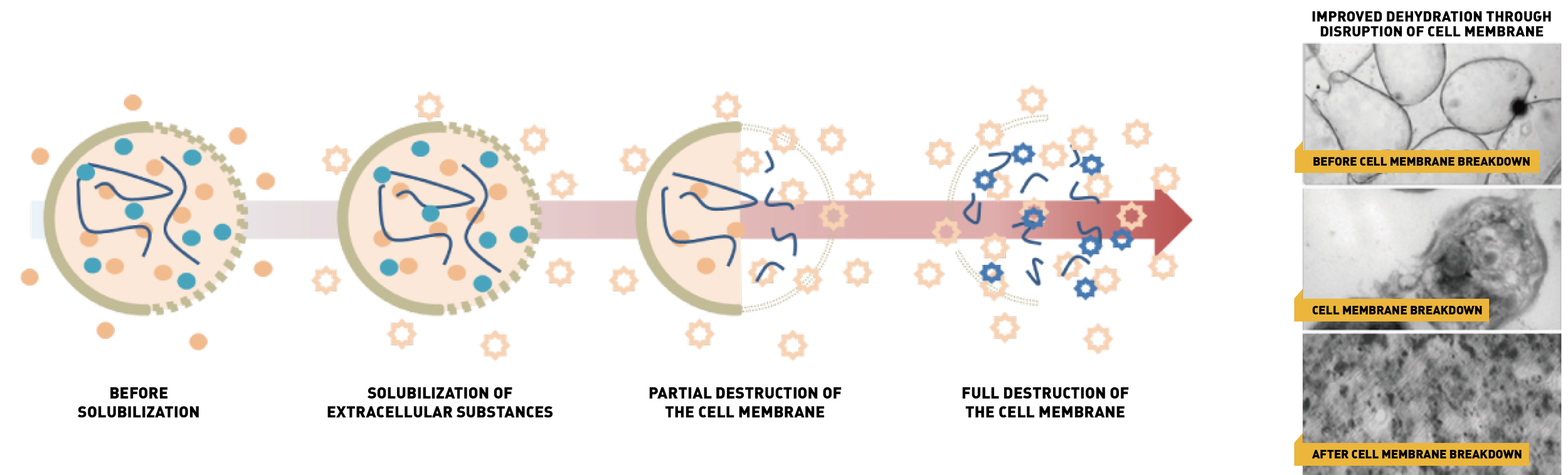

The Draco Advantage
-
Draco uses only temperature and pressure to breakdown cell walls, releasing trapped water for improved dewatering.
-
Draco reduces sludge volumes by a minimum 70% after dewatering and up to 85% after drying, resulting in lower offtake and transportation costs, reduced tipping fees, and increased sustainability.
-
For plants with anaerobic digesters, centrate from Draco’s dewatering press is returned to anaerobic digesters for increased biogas production
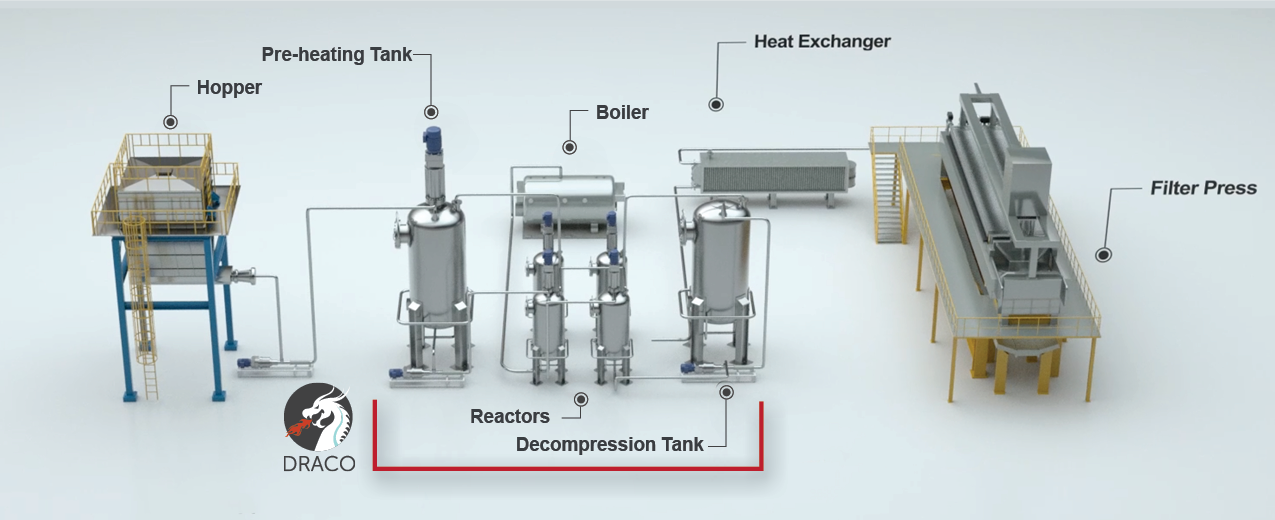
Draco’s patented multi-steam spargers and agitator provide more even heat distribution and transfer, allowing for increased efficiency and energy savings regardless of whether or not your facility has anaerobic digestors.
Central agitator boosts heat transfer and helps maintain a homogeneous state within the reactor.
Patented spargers and agitators allow feeding of concentrated sludge up to 22% dry solids.
Steam is used to build heat and pressure in the reactor vessel, causing cell lysis and improving the dewaterability of cellular sludges.
Even distribution of heat energy within the reactor allows for processing of more concentrated sludges and eliminates unnecessary dilution.

Reduce sludge volumes by 85% while minimizing energy, disposal, and operating costs.
Featured Draco References
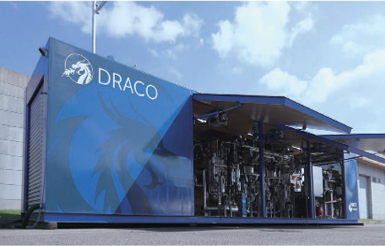
Mobile Sludge Reduction Device
2 ton/day

Daejeon Sewage Treatment Plant Modernization Project
780m3/d
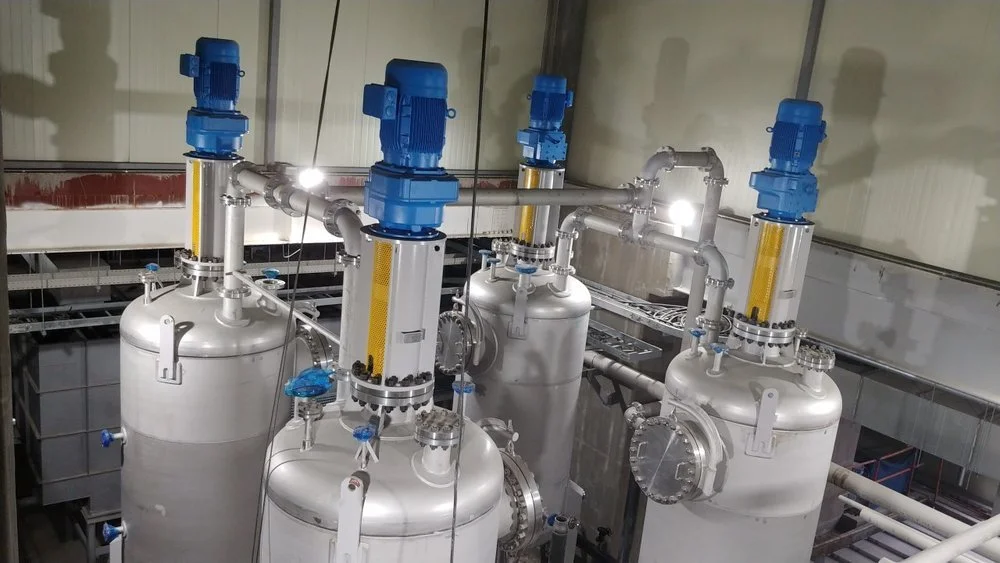
Reduction of Slaughter Waste of Bukyung Pigs
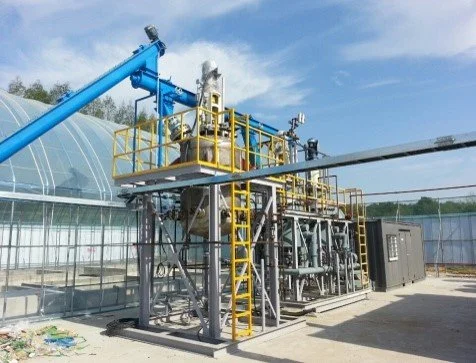
Icheon Livestock Burial Site Environmental Management and Restoration
DRACO References
| Operation | Annual Capacity (tons DS/yr) | Location (City, Country) | Application Type/Purpose |
|---|---|---|---|
| 2019 | 7,300 (100 wet tons/d @ 20% DS) |
Gimhae, Korea | Operating Sludge volume reduction (w/o AD) Mixed municipal sludge and slaughterhouse waste |
| 2027 (Expected) | 32,850 (450 wet tons/d @ 20% DS) |
Seosan, Korea | In design Retrofit of existing solids handling facility to increase throughput w/o adding drying capacity Municipal sludge |
| 2028 (Expected) | 32,522 (495 wet tons/d @ 22% DS) |
Daejeon, Korea | Under construction Increase biogas production (Pre-AD) Municipal WAS-only THP |
| 2028 (Expected) | 5, 913 (90 wet tons/d @ 18% DS) |
Mokpo, Korea | In design (P3 - finalizing contract) Increase biogas production (Pre-AD) Municipal sludge THP |