GS CALTEX
Project to Install a New DAF Package at Wastewater Treatment Plant No. 1

To replace IAF equipment with low pollutant removal efficiency
A project that reliably treats highly concentrated hazardous wastewater while simultaneously reducing operating costs and mitigating environmental and safety risks
Project Overview
Project Name: New DAF Package Installation Project at Wastewater Treatment Plant No. 1
Client: GS Caltex
Location: Yeosu Plant 1
Industry: Petrochemicals / Industrial wastewater
Treatment Target: High-concentration wastewater containing oil and suspended solids (SS)
Treatment capacity: 9,600 m³/day
Status: Trial operation completed; currently operating stably (since February 2026)
Key Tasks
Low treatment efficiency of IAF systems (SS removal efficiency: 26–87% / Oil removal efficiency: 17–20%)
Excessive increase in chemical injection volume due to reduced treatment efficiency of the IAF system
Large amounts of gas are generated due to untreated contaminants, posing a risk of worker exposure to hazardous gases (such as H₂S)
Increased contamination in downstream processes (sand filters, carbon filters), leading to frequent malfunctions and instability in discharge standards
Environmental regulations and legal risks remain a constant concern
Pipe blockages and operational instability
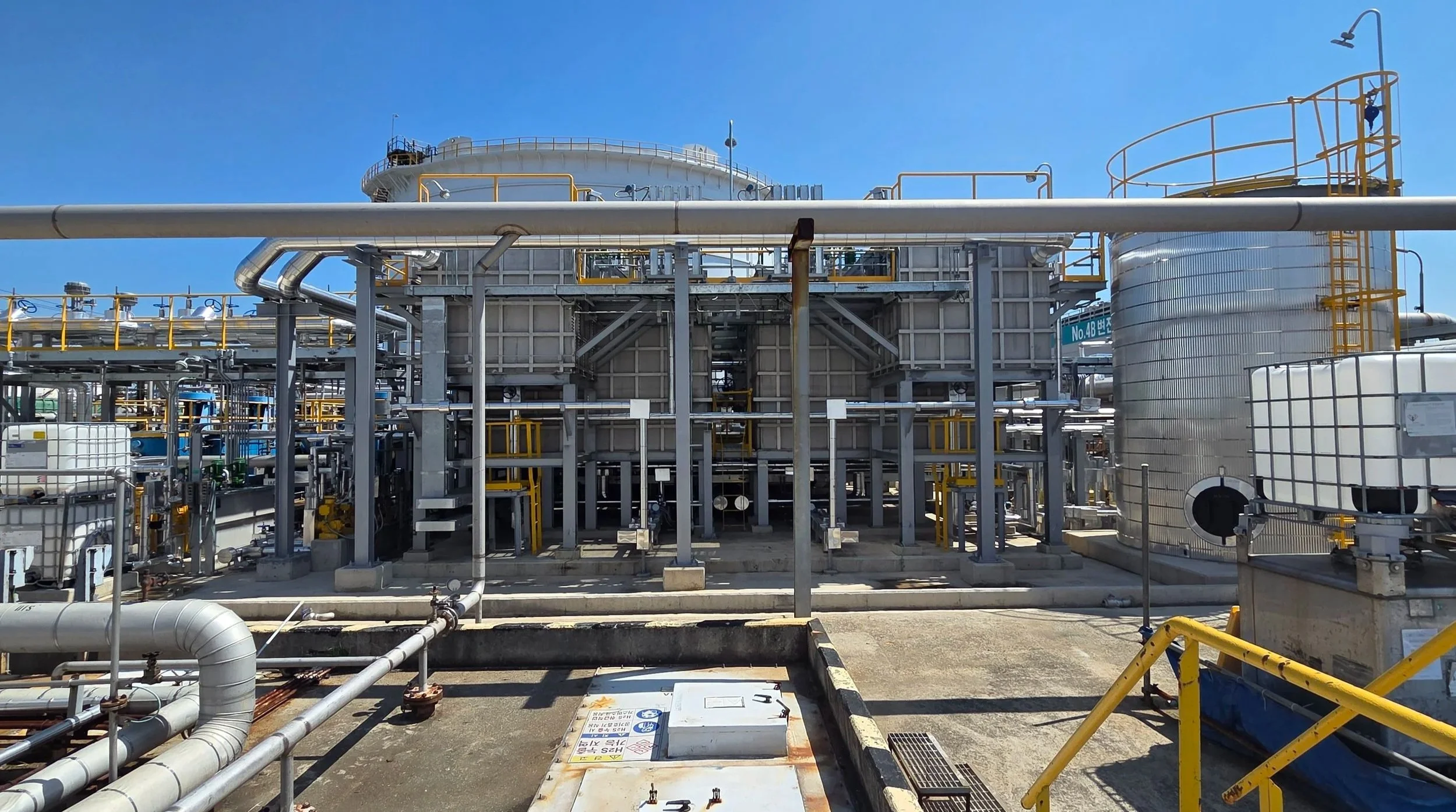
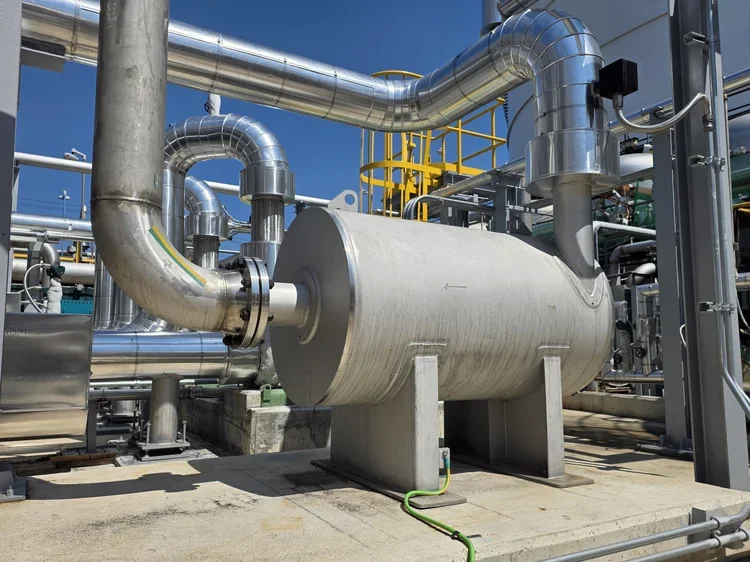
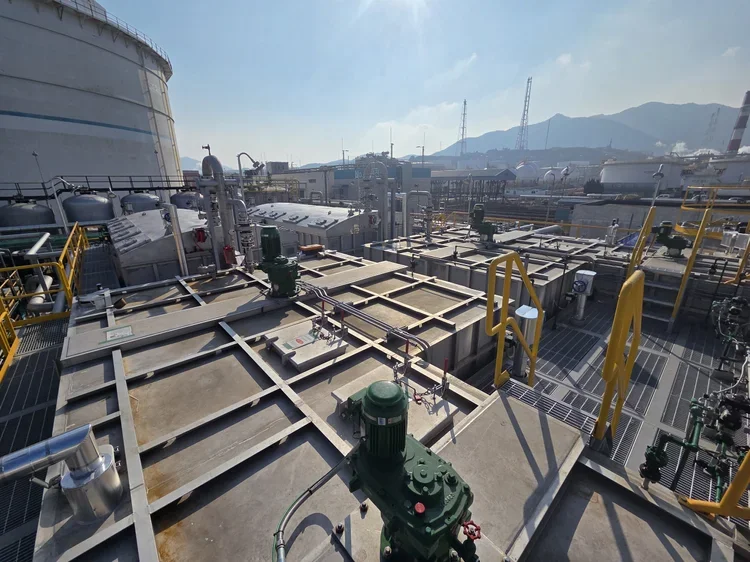
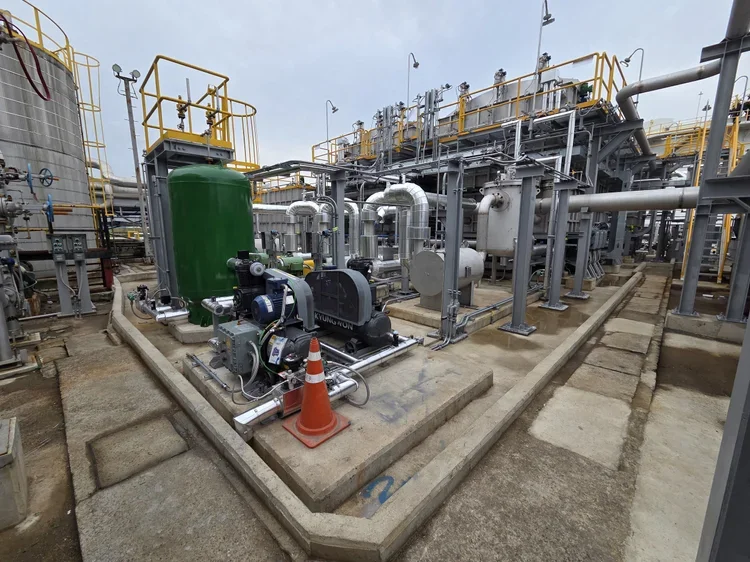
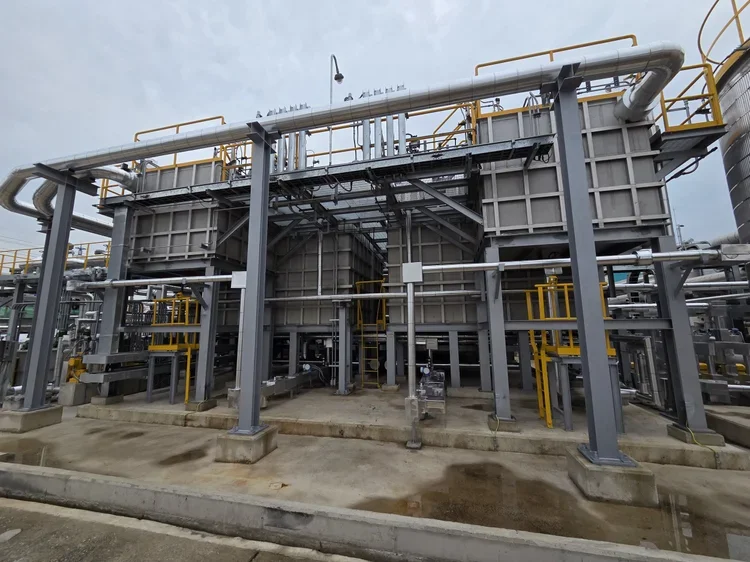
[ New Facilities ]
-
Utilizes microbubbles to effectively separate suspended solids (SS) and oil from hazardous wastewater.
-
We have stabilized the discharge of treated water through an automatic water level control system linked to fluctuations in inflow, thereby improving operational efficiency and convenience.
By automatically optimizing chemical dosing based on the concentration and flow rate of the incoming wastewater, we have improved treatment efficiency and reduced chemical consumption.
-
We have integrated DAF equipment into the existing DCS screens to maximize operational convenience and enhance connectivity with upstream and downstream equipment.
Solutions We Offer
Our Impact
Water Quality Improvement
Average concentration of treated water: 3 mg/L or less (inflow: 35–240 mg/L; treated water: 2–4 mg/L)
100% oil removal (inflow: 14–158 mg/L; treated water: not detected)
Process Improvement
Achieves a level of treatment performance sufficient for direct discharge into the ocean without the need for a downstream sand filter / Reduces downstream process failures and operational issues
Cost savings
Chemical costs reduced by approximately 1.4 million won per month ( IAF: 7.7 million won/month ⇒ vDAF: 6.6 million won/month)
Savings of 1.4 million won per replacement on filter media replacement and treatment costs for the downstream process
Safety and List Improvements
Eliminating the risk of worker exposure to hazardous gases
Eliminating the risk of environmental regulatory violations by addressing inconsistent discharge standards
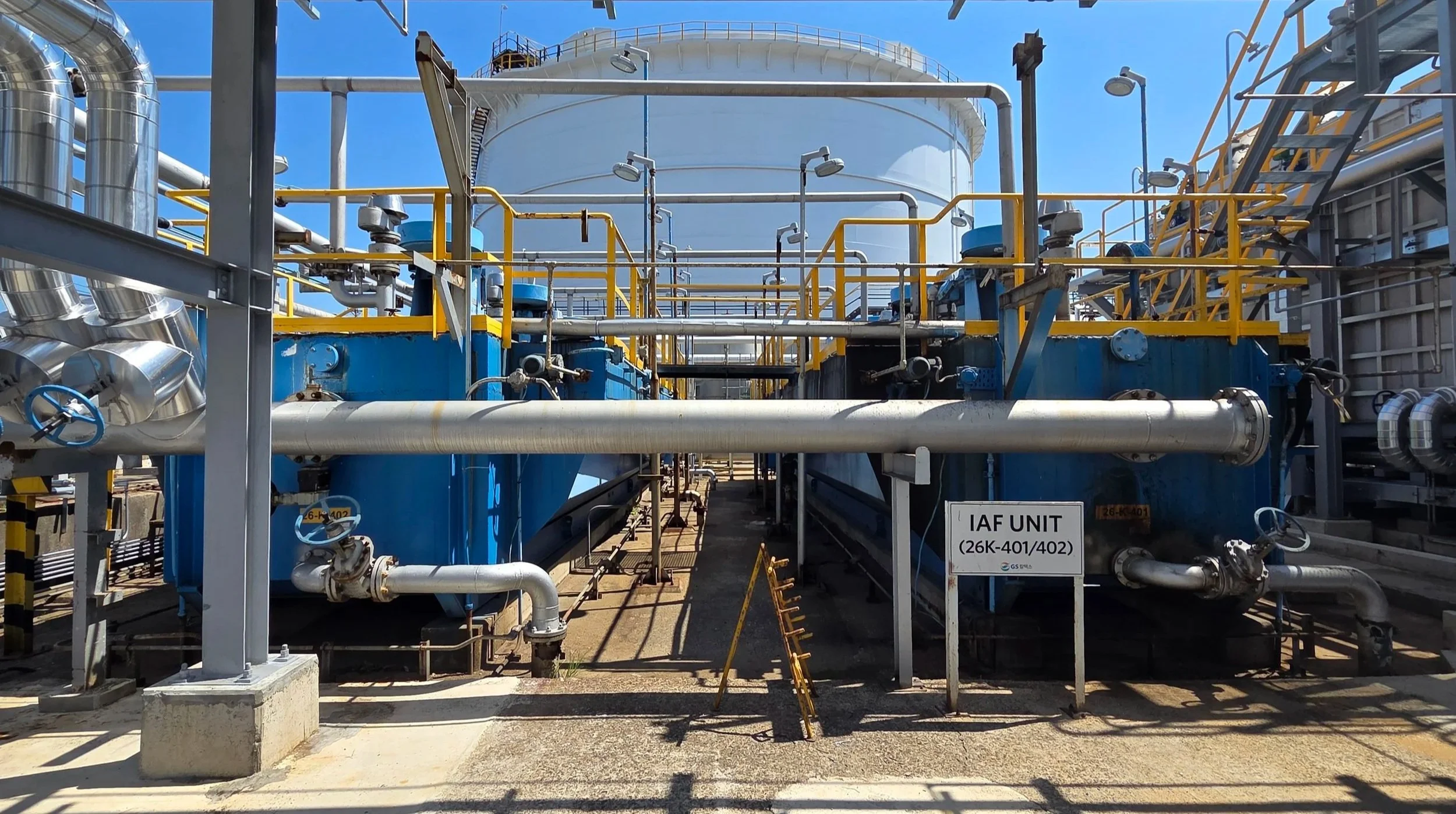
[ Existing Equipment ]
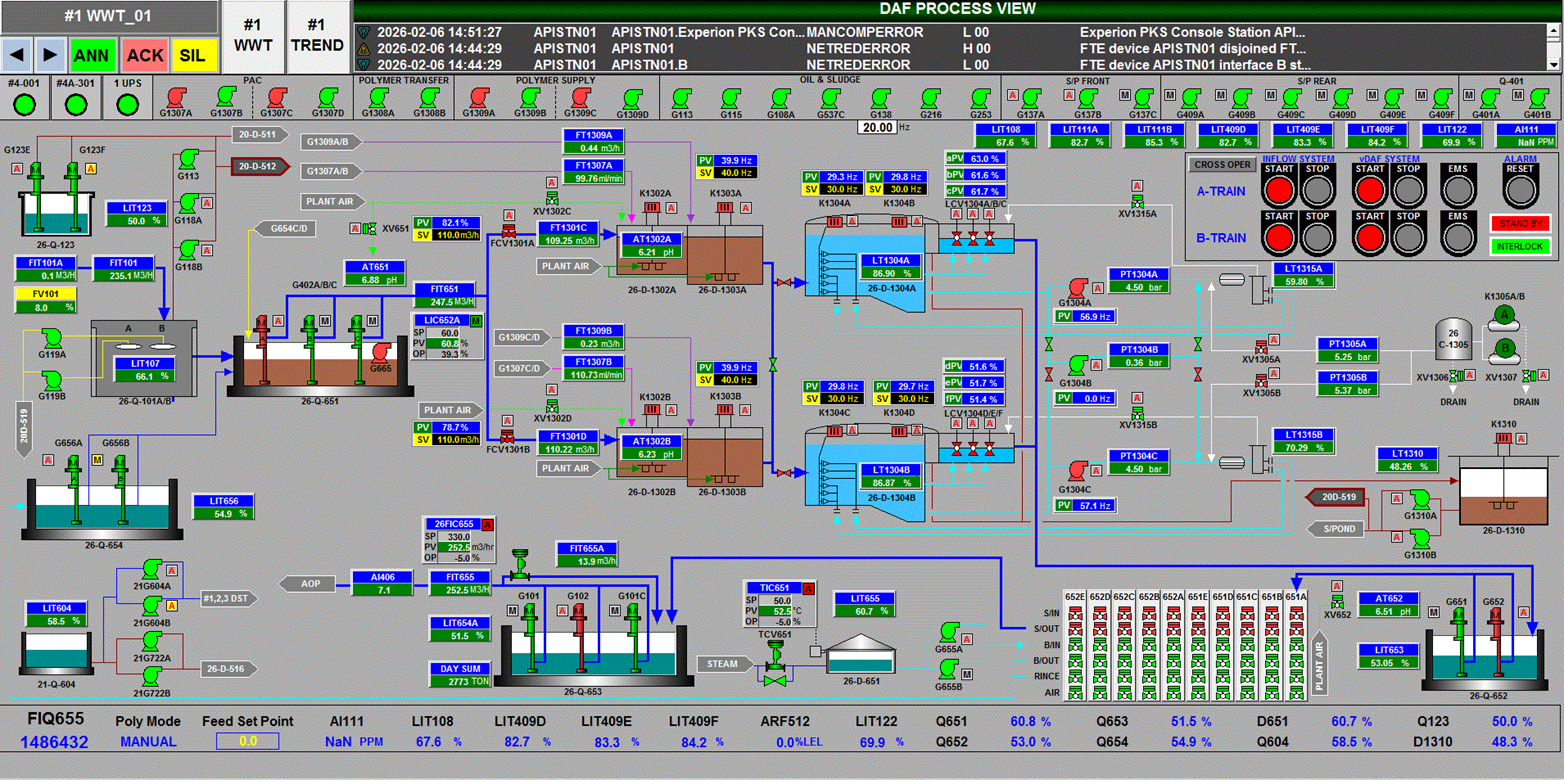
[ System Integration Management Screen ]
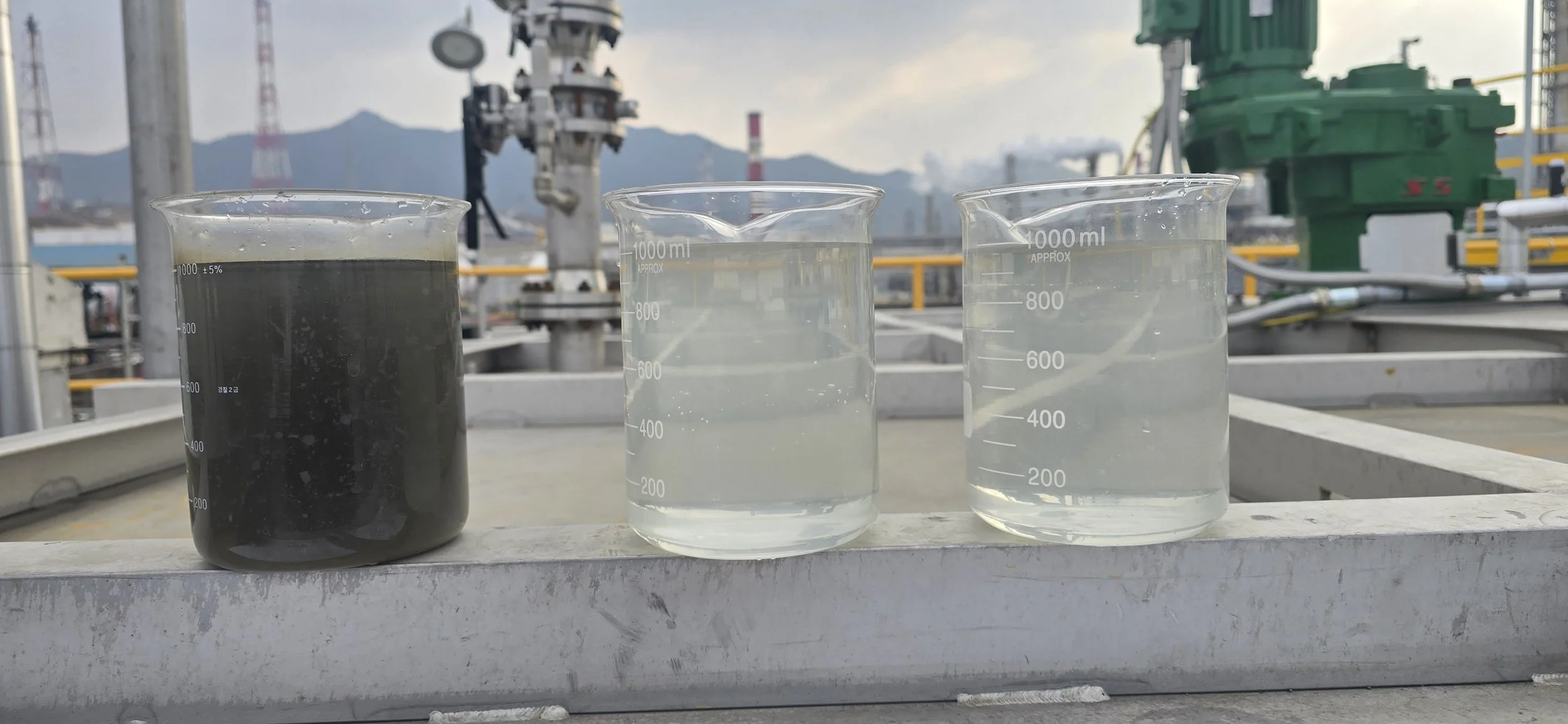
[ Water Quality Test ]
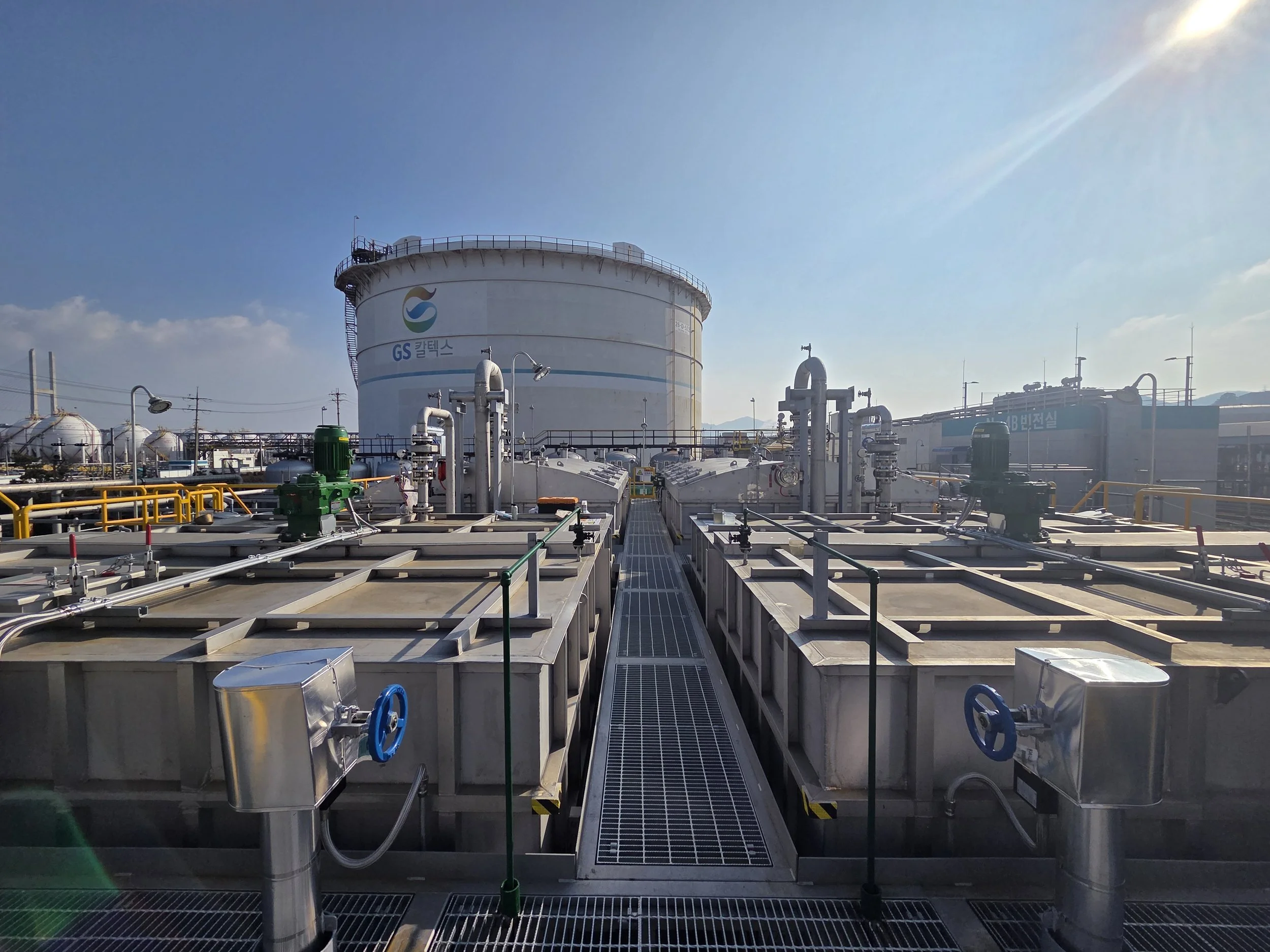
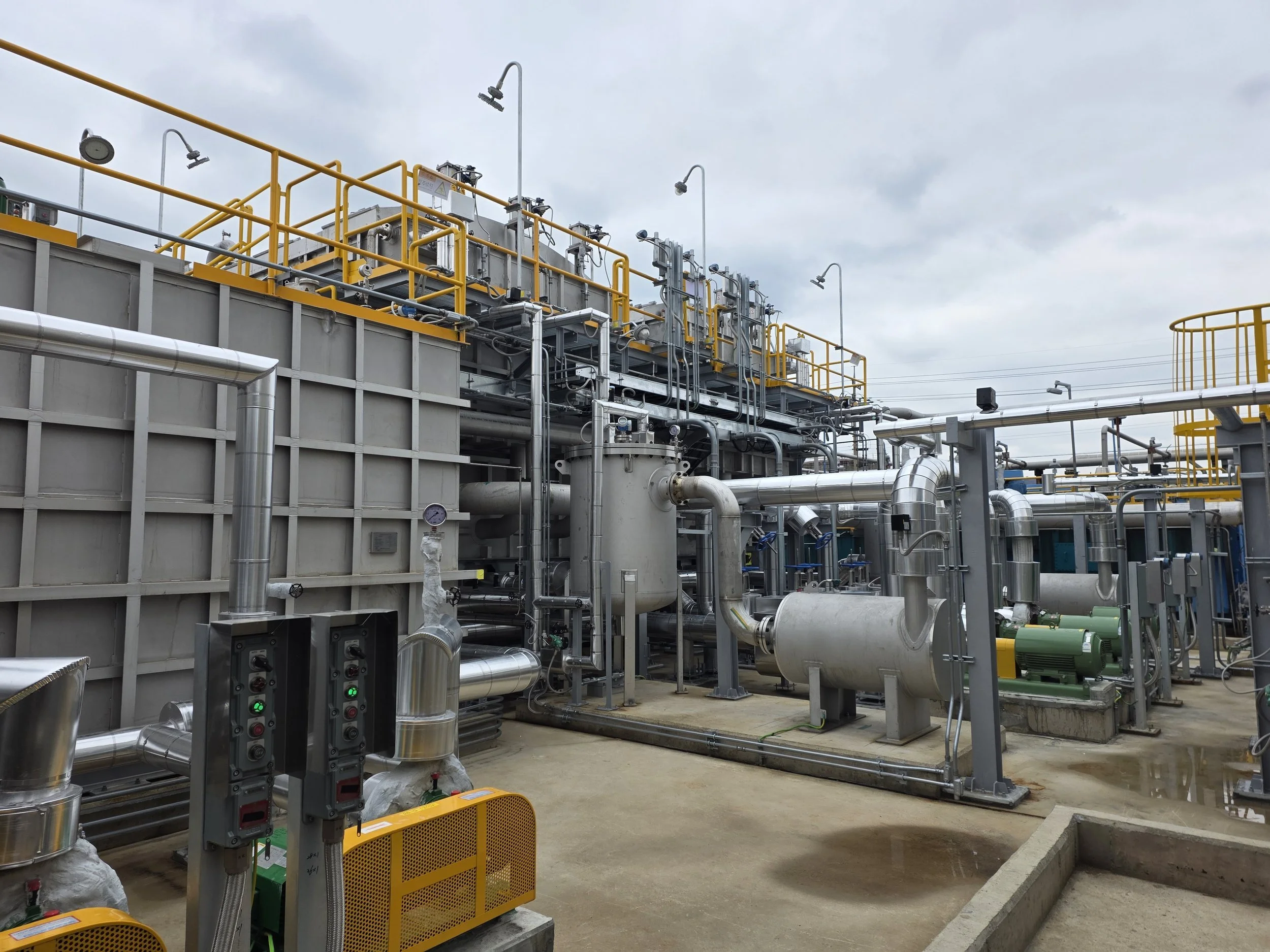
Scope of Work
1. Design and Engineering
Civil Engineering Design: Design of foundation pads to ensure structural stability against equipment loads
Process Design:Customized, optimized design based on analysis of influent wastewater characteristics and experimental testing
Facility Layout Design:Based on a 3D model, optimal placement of the new DAF equipment on a 30m × 21m site within the factory following the demolition of the existing IAF facility; design of efficient piping routes that take worker traffic patterns into account
Electrical/Instrumentation Design:Design of DCS (Distributed Control System) control logic, taking into account integration with upstream and downstream vDAF equipment
Permit and Licensing Services: Review and implementation of legal compliance requirements related to water quality and processes, including HAZOP studies and amendments to environmental permits under the Integrated Act
2. Procurement and Manufacturing
DAF System Package:Micro Bubble Generator, Flotation Tank, Automatic Flow and Water Level Control System, Scraper System
Automatic Chemical Dosing System: A system that automatically optimizes chemical dosing based on the concentration and flow rate of incoming wastewater , thereby improving both treatment efficiency and chemical usage.
Piping and Valves: Selection of appropriate materials to prevent corrosion and incorporation of piping designs to prevent sludge buildup
Electrical panels and control devices: vDAF package PLC panels, communication network panels for integration with the DCS (Distributed Control System), and water quality meters
3. Construction and Installation
Piping and Equipment Installation: Installation of the vDAF package (mixing/coagulation tank, flotation tank, fine bubble generator, sludge storage tank, pumps, and instrumentation) and process piping work
Electrical Work: Power and signal wiring for control panels and measuring instruments
4. Commissioning and Performance Warranty
Confirmation of Mechanical Completion (MC)
: Verify whether the installation of equipment, piping, valves, tanks, etc., has been completed
: Inspection of construction status against P&IDs and drawings
: Pipe flushing, removal of internal debris, leak test
: Check the installation status and alignment of rotating equipment (such as pumps)
Pre-Commissioning
: Pipe Hydrostatic Testing and Leak Testing
: Measurement of electrical insulation resistance, verification of grounding status
: Instrument Loop Check (Verify that signal transmission and reception are normal)
: Valve Operation Test (Manual/Automatic)
Dry Commissioning
: Verify standalone startup and interlocks for pumps, agitators, blowers, etc.
: PLC/DCS Control Logic and Alarm Testing
: Verify the switch between automatic and manual driving modes
Load Test / Process Commissioning
: Start of process operation after actual wastewater inflow
: Tuning of Automatic Chemical Dosing Control (Flow Rate/Concentration Linkage)
: Instrument Calibration (pH, SS, DO, etc.)
Optimization and Performance Testing
: Deriving conditions for minimizing chemical usage and maximizing treatment efficiency
: Automatic control (PID, etc.) Fine-tuning
: Driving Manual Requirements Finalized
: Verification of conditions for 15 days (360 hours) of continuous operation and water quality guarantee
: Evaluation of treated water quality, treatment capacity, and chemical consumption
: Driver Training (Theoretical and On-the-Job Training)
5. O&M Support and Performance Maintenance
Technical support for responding to abnormal situations (water quality fluctuations, equipment malfunctions)
Regular Analysis of Treated Water Quality and Treatment Efficiency
Periodic inspections of pumps, blowers, and gauges, as well as technical support and root cause analysis in the event of a malfunction
Expected Effects and Outcomes
Confirmed outstanding processing performance
Water quality analysis conducted by GS Caltex and state-certified agencies has demonstrated exceptional treatment performance that exceeds the guaranteed standards.
· SS(Suspended Solids): Inlet 35–240 ppm → Outlet 2–4 ppm(Removal rate: 95.4%)
· Oil(n-hexane): Input: 14–158 ppm → Output: Not detected(Removal rate: 100%)
Mitigating the risk of regulatory violations and reducing operating costs
We have minimized environmental regulatory risks by consistently meeting water quality discharge standards and reduced operating costs through process and facility optimization.
Average SO₂ concentration of 3 ppm or less; oil concentration not detected
Chemical costs reduced by approximately 1.4 million won per month ( IAF: 7.7 million won/month → vDAF: 6.6 million won/month)
Cost savings of 1.4 million won per replacement for sand filter media in the downstream process
Practicing ESG Management (Safety and Environment)
Leveraging our cutting-edge technology and engineering services, we have minimized untreated pollutants and reduced the resulting harmful gases (H₂S, VOCs), thereby ensuring worker safety and minimizing environmental risks.
Reduction in Scheduled Maintenance: By minimizing scheduled maintenance through improved equipment reliability and process optimization—achieved by reducing equipment failures—we reduce workers’ exposure to hazards.
Establishing a Sustainable Operating System: Building a sustainable system capable of long-term, stable operation based on reducing environmental impact and ensuring safety